Life And Teachings of the Masters of the Far East


By David Tame, March 2023.

A Facebook friend of mine posted a quote from Volume 2 of these books [1] just hours ago, to which I gave quite a lengthy comment, and I now see the comment has been deleted (without any PM to myself). I think my comment is worth preserving.

I am very aware that, when it comes to people like Baird Spalding and his books, people find it very hard to face the truth that what he wrote was not genuine. So, evidently, my comment has been ‘censored’. Similarly, just for example, one comes across the same incapability to face the truth with believers in the books of Carlos Castaneda [2], who also definitely was long ago, in 1976, proven to have written his books as works of fiction [3]. I believed in the Castaneda books too for three or four years.

I’m a person who simply believes that real truths must be preserved, no matter how they may spoil one’s view of reality. We must adjust ourselves to Truth, not try to make Truth adjust to our conception of it. As the motto of Theosophy has it, “There is no Religion higher than Truth”[4].

My deleted or censored comment on Spalding and his “Life and Teachings” books, therefore, since I did take the trouble to write it, is as follows:

I myself am a lifelong believer in such genuine Masters. But in order for the truly genuine accounts and Their teachings to retain repute, I’ve always felt that we must ‘fess up when anything else is not quite what they seem: for the very sake of the reputation of wholly genuine books.
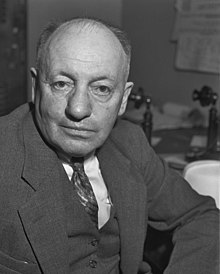
There is a deep mystery behind Spalding which may never be solved. The brief Wikipedia article the photo is taken from is evidently written by a ‘true believer’, and to be historically factual would need a lot of rewriting [5].

He had definitely never been to India before 1935, and he was not old enough to have been on any journey to India in “1894”. As his friend David Bruton states in his biography, Spalding advanced his age by two years upon every birthday to try to make it appear that he was old enough to have made such a journey [6]. He’d long planned to write Volume 1, though he had never himself been to the East. He wrote the first volume, and upon its unexpected success, the publisher asked him to write a second and then a third volume by virtue of the fact that, in the publisher’s eyes, they made more money for him than the rest of De Vorss’ books put together. If asked almost any question at all, Bruton tells how Spalding seemingly impulsively never replied truthfully, even about innocuous daily things.

As another means of making money, publisher DeVorss arranged for Spalding to be the guide for a party of spiritual tourists, who paid for the journey, to take them to India in 1935, yes, but soon after arrival it started becoming clear that Spalding had no knowledge or experience of India at all. (Anyone who does know India can tell that from the books, imho.) The travelling companions had frankly expected to meet at least one Master, but Spalding kept making poor excuses.

Genuine British mystic, Dr Paul Brunton, writes of how he came across Spalding and his disgruntled party. Mystic Paul Brunton (not to be confused with friend and biographer David Bruton) was India-experienced, and saw through him. so Spalding finally admitted to him that his India travelogues “dealt with visits made in his astral body, not in his physical body, as readers were led to believe”. There was a showdown with his traveling companions, upon which Spalding basically ran away, turning up weeks later at the docks, penniless, to get back to the USA. One of the fellow-travelers paid for his passage back.

A great deal more along these lines can be read about Spalding, and I would advise the researcher to read his one biography, Baird T. Spalding As I Knew Him by his genuine friend, David Bruton. It’s full of mysteries and puzzles, and a good read by itself. I do find that ‘true believers’ find all this hard to accept, yet they need to read further such as in Bruton’s book. Bruton is no critic, and not trying to debunk, simply to tell the real truth. By the time Volume 1 of “Life and Teachings” came out in 1924, there were plenty of esoteric/occult sources from which the gist of such a tale could have been concocted, particularly Theosophy, but many other sources too.

However, one major part of the mystery is that since Spalding was never in India before 1935, and was too young to have been there in 1894, nevertheless his books are certainly packed with spiritual truths, even if the actual events are fictitious. His books have inspired generations of readers nonetheless, doing great good, and therein lies their undoubted value. (By the way, publisher DeVorss must surely have swindled him, since he died with only $15 to his name, apparently.)

I like a portion of David Bruton’s introduction to his biography, in which he says, in as many words (my copy isn’t to hand), “No matter the reality or not, or the real nature of his stories, it cannot be taken from Baird that he did indeed inspire many thousands of people, for which he should be remembered.”

I am writing this post on a very coincidental day, because just today I received the latest edition of the books (!), which simply contains Volumes 1 to 3, later volumes being poor efforts of the publisher to just keep making more money and of little value. The first three volumes are now newly published as one book, with the new title, The Journey (2021), still by the same publishing house, but the initial publisher himself, DeVorss passed on in 1953. They have been honest enough now, today, to give this brand-new book a 14-page Introduction by Mitch Horowitz, academic of American occultism, who comes clean on the real life-story of Spalding [7].

I would just say, take Spalding’s works as ever one wishes, but the 1894 journey never took place. The supposed backing establishment confirms that. If one wishes, one can think of his accounts as being overshadowed by some spiritual force, or, in any case, at the very least by his own spiritual knowledge, and perhaps by even more. It is certainly not my wish to pop any balloons, but Truth Above All must be our guide.

So if anyone really wants to follow-up on this, you can start with David Bruton’s 1954 biography, and the recent 2021 14-page introduction to the latest edition.

Sources

[1]. Spalding, Baird T. 1924-1997. Life And Teachings of the Masters of the Far East. Vols. 1-6. Los Angeles: DeVorss & Company.

[2]. Wiki entry: Carlos Castaneda.

[3]. De Mille, Richard. 1976. Castaneda’s Journey: The Power and the Allegory. Santa Barbara, CA: Capra Press.

[4]. Blavatsky, H. P. 1889 (1920). The Key to Theosophy: An Exposition on the Ethics, Science, and Philosophy of Theosophy. Los Angeles, CA: The United Lodge of Theosophists.

[5]. Wiki entry: Baird T. Spalding.

[6]. Bruton, David. 1954. Baird T. Spalding As I Knew Him. Los Angeles: DeVorss & Company.

[7]. Spalding, Baird T. 2020. The Journey: Life And Teachings of the Masters of the Far East. Reprint in one volume of Life And Teachings of the Masters of the Far East, vols. 1-3. With introduction by Mitch Horowitz. Los Angeles: DeVorss & Company. (Amazon, where you can read the Horowitz intro)
 

Modernity Between the Rise and Fall of the Cartesian Cogito


Introduction.

In this blog I will compress into a short story my proposed periodization of Modernity, bookended by the Renaissance and Post-modernity. My idiosyncratic idea is to place the start of modernity in 1620 and its end in 1926.

The Start of Modernity in 1620

The choice of 1620 has two reasons. First, it was the winter of that year that Descartes had his most sustained meditations on his own intellectual traditions and authorities, all of which he deemed contradictory and not well-founded. He had the time and opportunity to do so because he was part of a Catholic army besieging Prague in 1620 in the context of the 30-year war (1618-1648) fought between Catholic and Protestant powers. So, reason one for 1620 is the moment Descartes hits upon, or constitutes, the experience of ‘Cogito ergo sum’ and its substantive mind-matter dichotomy.

The Esotericist Renaissance

Reason two has to do with what specific event triggered that war and what mythic-intellectual movement there and then found its demise. And here I will have to digress on what came before Modernity to which it was a partial reaction, and that is the astonishing Renaissance, but then in its mythic and philosophical aspects and not its usual humanist and artistic ones.

For starters, two sets of manuscripts, which came to the west around the 1470s, had a profound influence on the intellectual start of the Renaissance: 1) many of the Platonic dialogues coming from the Islamic east by way of Constantinople and 2) the so-called Corpus Hermeticum (CH), a collection of manuscripts in Greek many people thought were written at least before 1,000 BCE by an ancient and wise magus by the name of Hermes Trismegistus or Thrice Great Hermes. Both the terms hermeticism and hermeneutics are derived from the name of this mythic character.

These manuscripts contained a lot of magical, Gnostic and other pagan, pre-Christian ideas. The translation of the CH into Latin by the humanist and Platonist Marsilio Ficino got right of way before Plato. The first volume, titled Pimander, was published in 1471. Apparently intellectuals then were more interested in magical, esoteric, occult ideas and practices than the more sober, transcendental thoughts of Plato.

Ideas like ‘As above, so below’ (i.e. a sympathetic parallel between the microcosm of man and the macrocosm of the universe), the harmony of the cosmos, alchemy (the transmutation of lead into gold and the soul into divinity), astrology, and hidden sources of wisdom in Egypt and the east, were part and parcel of this ‘stream’, now named by academia Western Esotericism. Throughout the 15th and 16th century these ideas were very influential, but later historians did not give them much attention and so that aspect of the Renaissance became more or less forgotten. But in the early 17th century there were even some German principalities where these ideas were not only common but were half openly promoted by its rulers. One had as its capital Heidelberg in the Palatinate, the other was Prague in Bohemia.

Side Story

Now, one more step back before going forward, there existed something like the position of Holy Roman Emperor, which position was not Roman but Catholic, usually not that holy, and without an empire. It was a tradition since 9th century Emperor Charlemagne (Charles the Great) to have someone in that position, which became increasingly devoid of real power and territory, but was still something the Catholics and Protestants respected. And the person for that position was democratically chosen by his peers, i.e. a small quorum of other kings, princes and aristocrats.

Till 1612 it was Rudolf II of Bohemia, a Catholic, who held the title and he was an avid ‘western esotericist’ with his town Prague a free-haven for alchemists to set up their smokey laboratories and astrologers to cast their predictions. Catholics and Protestants alike did not necessarily look favorably on such practices. When the Bohemian nobles came together to choose the next king of their realm they chose Prince Frederick V of the Palatinate, who was Protestant and had strong esotericist sympathies. He accepted and moved to Prague in November 1620. With this crown came also the right to vote for the next Holy Roman Emperor, who might this time be a Protestant as the Protestants had gained with Frederick a majority in that electoral college.

Long story short, the whole of Catholic Christendom was verbally opposed to that prospect, but to no avail, and Frederick was crowned King of Bohemia. The Catholics then marched on Prague and beat Frederick at the Battle of the White Mountain, an early win in the 30 year war in which almost the whole of Europe was involved, including Descartes on the side of the Catholics. Frederick lost both Bohemia and the Palatinate and fled to The Netherlands. With him went the last instance of the Occult Renaissance in political power.

Preliminary Summary

So, it was at the siege of the stronghold of the last and losing ‘western esotericist’ Prince Frederick that Descartes had his profound ideas, which were more or less instrumental in challenging all this esotericism as unscientific and merely mythic. And a few decades later a Frenchman, Causabon, proved that the Corpus Hermeticum was composed in the 3rd century CE, so there went its authority as something wise and ancient.

And I just read Hegel to the same effect:

The discovery of the laws of nature enabled men to contend against the monstrous superstitions of the time, as also against all notions of mighty alien powers which magic alone could conquer. (Philosophy of History, Dover edition, p. 440)

Under the clear and precise eye of rationalism and science the esoteric tradition went underground. Therefore Frederick’s loss in 1620 was the second reason to have Modernity start in that year and a good reason to mark it off as the end of the Renaissance. I always thought this to be quite neat, but never wrote it down.

One last speculation is the question wether Descartes and Frederick might have met in the Netherlands in the 1620s and what conversation they might have had. A subject of possible agreement could have been the role of the pineal gland.

The End of Modernity in 1926

The reason to place modernity’s end at 1926 has to do with the thorough critique published that year of Descartes’ philosophy in Heidegger’s Being and Time. Basically his critique was that the Cartesian notion of both subject and object as separate substances was premised on the mistaken idea to interpret, or project onto, subject and object the ontological category of substantiality in the sense that both have the reified nature of being something ‘thing-ly’ present-at-hand (Vorhanden). 

Being and Time itself can also be construed as the beginning of post-modernity given its impact on the major thinkers of that movement. Of course before Heidegger there were Darwin, Nietzsche and Freud deeply challenging Modernity’s concept of a rational and progressing humanity, but Darwin and Freud were very rational and scientific in their aims and Nietzsche was still in the 1920s a bit marginal. It is only after the collective traumatic shock of WWII that Post-modernism gains traction.

And Modernity did not go unchallenged in its 300 year reign. Romanticism, German Idealism and intellectual developments in the latter half of the 19th century posed serious challenges to it. And the tradition of Western Esotericism had many small comebacks in the persons of Emanuel Swedenborg, Jacob Boehme and Anton Mesmer, and in the movements of American spiritualism with its off-shot the so-called occult revival in the US and Europe after 1875.

Madame Blavatsky and her Theosophy had a clear and important role in this movement, reviving many esotericist ideas from the Renaissance, combining it with eastern ideas, and her own prolific fantasies and stage magic.

Though it is interesting to also look for remnants of esotericism in Descartes’ or Hegel’s ideas, one of the more surprising and underreported developments in the history of philosophy was how Kant had reacted to the voluminous writings of Swedenborg, a mining engineer and a seer creating vivid descriptions of the many mansions of heaven. Kant might have believed these writings initially, but reacted later strongly against them, influencing his epistemology regarding phenomena and noumena and implicitly declaring Swedenborgian claims beyond the pale of experienceability and conceptualization.

And Romanticism might also have had adherents dabbling in western esotericism. Hegel comes to mind, but I do not have access to sources to deepen that. What is clear is that Romanticism’s predilection for traditions and history, and resistance to cold rationality, would not put a principled opposition to appropriate Western Esotericist memes like bygone golden ages, hidden ancient wisdoms, eastern sages, and other enchanted narratives.

Conclusion

Taking all the above in, I propose the following demarcations between the Middle Ages, the Renaissance, Modernity and Post-Modernity:

I) 1471. End of the Middle Ages and start of the Renaissance with the publication of the Pimander.

II) 1620. End of the Renaissance and beginning of Modernity with the defeat of Frederick of the Palatinate in Bohemia where Descartes had its breakthrough meditations.

III) 1926. End of Modernity and beginning of Post-Modernity with Heidegger’s critique of Descartes in the publication of Being and Time.

Of course this periodization can be easily contested as it reflects personal preferences, it still has an internal logic I find compelling and fun to play around with.

Bibracte: Last Center of Celtic Occultism?

The other day I visited David Reigle’s excellent web site of the Eastern Tradition Research Institute and found again his paper on “The Centennial Cycle.” In this paper he discusses the origin of the policy by the Brotherhood of Mahatmas of enlightening the “western barbarians” on a centennial basis. Here I read that the very last of the Druid mystery schools in Europe was according to H.P.B. at Bibracte in Burgundy, France.

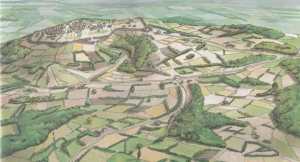
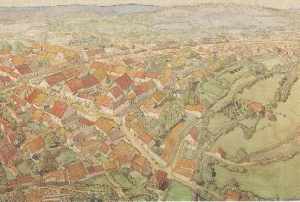
Drawing of Bibracte
Drawing of Bibracte as it might have looked like 100 B.C.E.

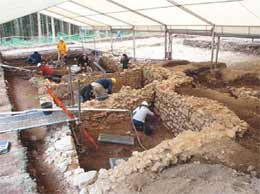
Bibracte was the capital of the Celtic tribe the Aedui and around 50 B.C.E. Caesar conquered this important Celtic settlement during his Gallic campaigns. During the reign of Augustus its inhabitants left the place for the newly founded Augustodonum (Augustus-city, now Autun) 14 miles east and nobody else replaced them, leaving the site pristine for archeologists to uncover 1900 years later.

Digging out Bibracte

Apparently after this loss the Brotherhood instituted its policy of sending every last quarter of a century somebody to instruct the West in the Wisdom-Religion, with H.P.B. being the one for the 19th century cycle.

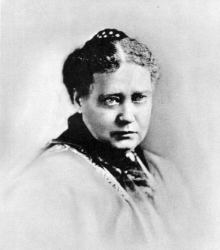
Helena Petrovna Blavatsky

H.P.B., in her posthumously published article “The Last of the Mysteries in Europe” quotes with apparent approval J.M. Ragon, a 19th century author on Masonic lore, from his Orthodoxie Maçonnique:…

Bibractis, the mother of sciences, the soul of the early nations [in Europe], a town equally famous for its sacred college of Druids, its civilisation, its schools, in which 40,000 students were taught philosophy, literature, grammar, jurisprudence, medicine, astrology, occult sciences, architecture, etc. Rival of Thebes, of Memphis, of Athens and of Rome, it possessed an amphitheater for gladiators, surrounded with colossal statues and accommodating 100,000 spectators, a capitol, temples of Janus, Pluto, Proserpine, Jupiter, Apollo, Minerva, Cybele, Venus and Anubis, and in the midst of these sumptuous edifices the Naumachy, with its vast basin, an incredible construction, a gigantic work wherein floated boats and galleys devoted to naval games; then a Champ de Mars, an aqueduct, fountains, public baths; finally fortifications and walls, the construction of which dated from the heroic ages.

She then stated:

Such was the last city in Gaul wherein died for Europe the secrets of the Initiations of the Great Mysteries, the Mysteries of Nature, and of her forgotten Occult truths.

I did this search because in a class at Olcott, the headquarters of The Theosophical Society in America (Adyar), we were looking into possible candidates of the 1975-2000 cycle and we discussed criteria for evaluating the candidates. Reigle in his paper develops a position in favor of the Dalai Lama and the Tibetan Buddhist diaspora as the 20th century effort of the Mahatmas.

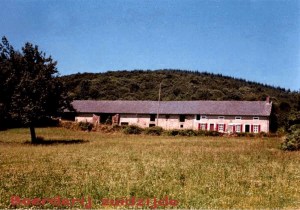
Peculiar coincidence is that I visited Bibracte many times in my life as my aunt bought in the 1970s an old farmhouse in the hamlet Les Jours at the foot of Mont Beuvray on which top Bibracte used to be and the farm is the closest inhabited structure to the site!

My aunt’s farmhouse at Les Jours

I knew that the leader of the Gauls, Vercingetorix, had camped there and that Caesar had stayed there as well for a winter after defeating the Gauls and, while there, wrote his book on the Gallic campaigns, Commentarii de Bello Gallico.

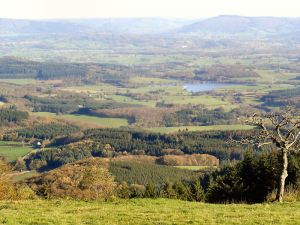
View from Mont Beuvray

But I had no idea that this place on top of the hill, now known as Mont Beuvray, next to my aunt’s farmhouse, also was a Celtic center of occult learning–the last one of its kind in Europe—and that its loss lead many centuries later to the founding of the Theosophical Society. At least according to H.P.B. It is now a prime archaeological site with a very nice museum displaying their finds and reconstructions of Celtic life.

Reconstruction of the area of Mount Beuvray (1st century B.C.E.)

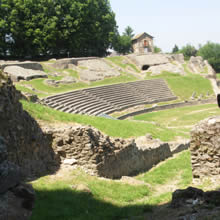
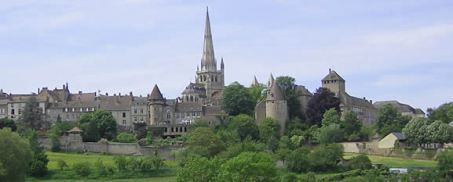
One memorable summer in the 1980s I spend in Les Jours with my aunt and grandfather, who was a Mason, while reading and discussing Yates’ academic study The Rosicrucian Enlightenment and Michael Baigent’s pseudo-historical Holy Blood, Holy Grail and through these books getting a feel for the “hidden tradition” of western esotericism. I would have gone to Les Jours again and join my family in August 2009 to celebrate my own half-centennial, but this plan fell through. I intended to do some research there and see what claims by H.P.B. and Ragon can be verified against the archaeological record. From what I read Ragon’s claims made about Bibracte are quite erroneous or, in H.P.B.’s words, “utterly incorrect”, as she qualified another of his claims. Bibracte was a fortified hill-town and none of the grand structures, which Ragon writes about, were ever erected there. It looks like, and he is not the only one, that he confused Bibracte with the nearby town of Autun, which does have a big Roman amphitheater, though it ‘only’ seats 17.000, and has a temple dedicated to Janus. Many historians and archaeologists in Ragon’s days thought that the correct location of Bibracte was to be found in Autun. But this was only a hypothesis. The other candidates were Beaune and Mont Beuvray. Only the excavations by the French archaeologist Jacques Gabriel Bulliot in the late 19th century confirmed the location to have been on Mont Beuvray.

Roman Amphitheater at Autun

The problem here is that Autun did not exist before Caesar’s time as it was founded in Augustus’ reign replacing Bibracte as the capital of the Aedui about 20 kilometers (12 miles) east. The other problem is that Ragon ascribes to the Celts feats of architecture and pastimes which are distinctly Roman and were quite out of reach for the more simple Celts.

View of Autun

It looks like H.P.B. was a little careless in taking over wholesale these claims by Ragon about Bibracte, even while she was aware of Ragon’s shortcomings as a historian as she warned her readers that “[h]owever learned and erudite, some of the chronological mistakes of that author are very great.” What has to be done is to sort out in more detail all the claims and think through the possible implications of the findings, especially addressing the question whether H.P.B. was unto something, but was incorrect in certain details, or if she was constructing her own mythic historiography by selectively appropriating Ragon’s Masonic (mis-)construals of history. One way or another the gap of cognitive dissonance between the Blavatskyan, emic, esoteric perception of history and the etic, scientific perception of history has to be bridged.

Govert Schuller
Wheaton, July, 2009