Reflections on the World’s Biggest Election

Introduction

India is constitutionally a secular country, but polarizing aspects of its religious culture and ethnic diversity have undermined electoral politics at an alarming speed and in an alarming manner.

Dr. Ambedkar, the author of India’s constitution, and Mahatma Gandhi (and even Jiddu Krishnamurti) tried to prevent that development in their own diverse ways.

Ambedkar tried by promoting the secular values of freedom, equality and fraternity with pragmatic arguments; Gandhi tried it with his inclusivity, especially by promoting good relations between Hindus and Muslims; and Krishnamurti contributed by radically questioning the violence-prone mechanisms of identity formation around the ‘me’.

What specific advise they would give contemporary Indians could be a worthy exercise in educated guessing, but they would certainly observe the current drift towards religion-based authoritarianism with consternation.

Education

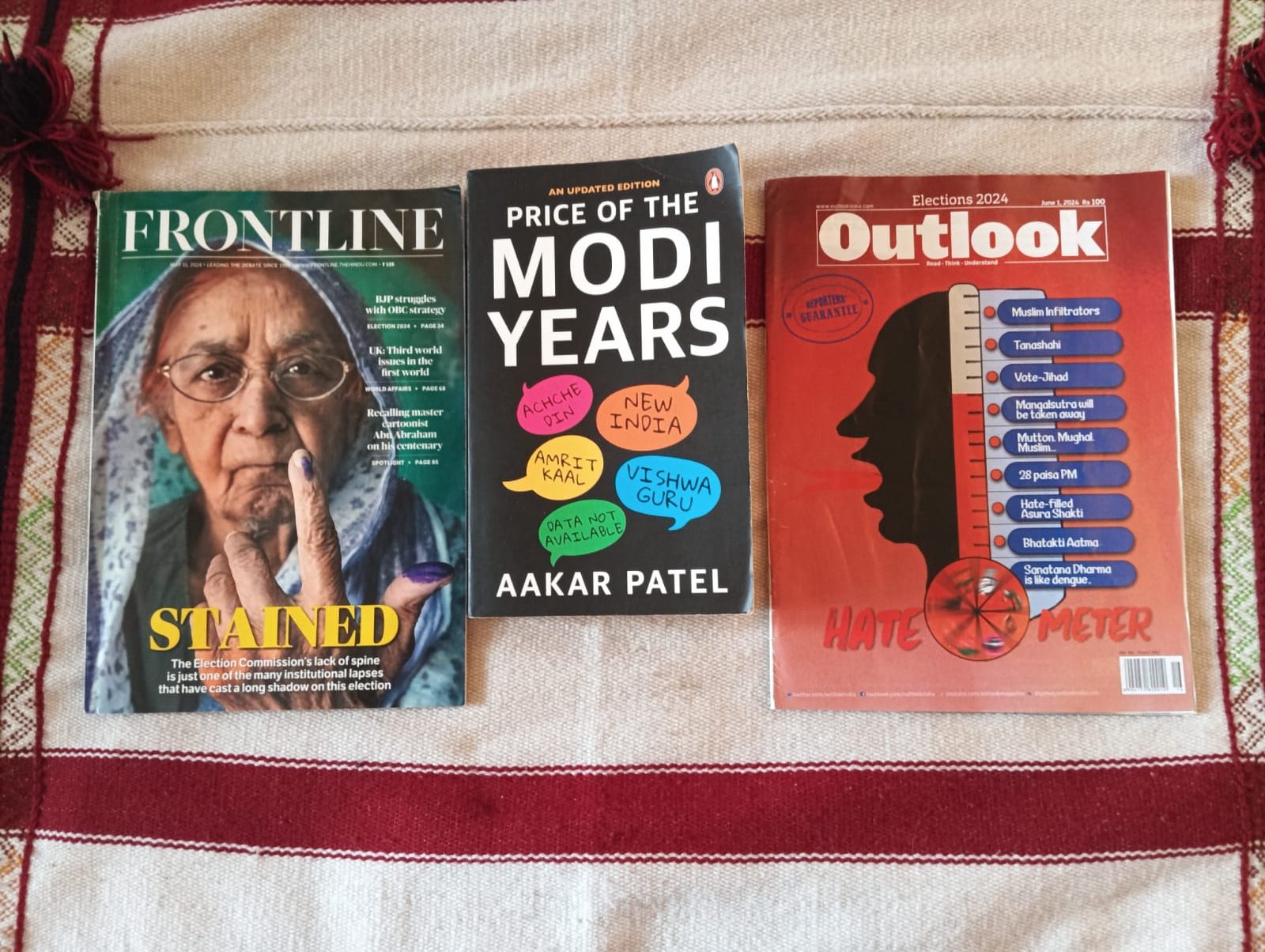
My own political education about India’s current affairs I’m receiving from, among others, the below pictured publications, which do not paint a pretty picture.

While reading the venerable Frontline and Outlook magazines during the election, and specifically Amnesty International India Aakar Patel‘s Price of the Modi Years, I became really worried about Indian politics.

Patel’s book opens with a devastating list of 50 international indices and ratings indicating that since 2014 India was slipping on almost all metrics, except some economic ones like competitiveness and innovation.

India fell in ranking in the spheres of democracy, human development, civil liberties, rule of law, press freedom, religious freedom, air quality, sustainability, the gender gap, intellectual property, food security and then some. Instead of reflection and realistic analysis, the response of the government in 2020 was a media campaign to correct perceptions, and some proposing India create its own indices. Patel concluded that,

The record leaves little room for debate or dispute. The scale and rapidity of decline in governance after 2014 is manifest. India was struggling to keep up with the world and sinking on several fronts. It may appear strange that anyone should have thought that reversing this performance required ‘a massive publicity campaign’ which would ‘shape India’s perception’ through advertising and more websites, but that is what Modi thought and how he oriented his government to act [p. 33].

Then page after page, going on for 450 in total, Patel’s “report card on India” relentlessly exposed many of the failed policies, illegal tricks and unconstitutional schemes by Modi and the BJP, apparently condoned by a partisan supreme court, largely under-reported by a suppliant press, uncritically accepted by their followers, and impotently decried by the opposition. 

The Election

But now I’m somewhat relieved with the outcome of the election (fortunately accepted by all as fair), which was reported as “India Cuts Modi Down“, illustrated by the following facts. BJP lost its seat in the district where the highly controversial Ayodhya temple was recently inaugurated–a feat high on its wish list–accompanied by lots of pomp with Modi as the guest of honor, or better, the officiating, non-official high priest.

Then BJP got halved in the conservative states of Uttar Pradesh, Maharashtra and Haryana, all part of BJP’s heartland, but also important agrarian states. Two states went from 100% BJP or BJP-allied representation to 100% Indian National Congress (INC), i.e. one seat from Nagaland and both seats from conflict-ridden Manipur (which means that the INC should move quickly to negotiate reconciliation and normalization).

All in all BJP lost 63 seats, while they had hyped the projection that their coalition could get a whopping 400+ out of 543 total seats in the Lokh Sabha, India’s chamber of representatives. Maybe they hoped for the magic realization of a self-fulfilling prophecy with the help of some of their favorite deities.

What motivated the Voters?

But this also scared voters, especially minorities (of which 200m Muslims), about what protections and privileges Modi and the BJP could take away from them with a super-majority, for example with a rewritten constitution (there are some versions floating around taking away all voting rights from religious minorities).

Another section of the population it might have lost are the farmers, whose plight has not improved since Modi promised to double their income in 2014, and who felt existentially threatened by a couple of agrarian reform bills against which they vehemently protested with success.

Then Modi’s mismanagement of the COVID pandemic, especially during the second wave in the spring of 2021, might also have cost him votes, certainly from the underpaid frontline health workers, and families and friends of the poor who didn’t get oxygen nor vaccines in time. And then those working in the deliberately shackled NPO sector (with 19m people involved) would have lost reason to vote for Modi, as would be the case for producers and consumers in the demoted journalism business.

Anyway, Modi, who now speculates that his birth was maybe not biological, has to step down from his self-promoted, Priest-King status to become an ordinary politician doing ordinary coalition politics with his secular allies to form a government and take his third term as India’s prime minister. 

He claims he was humbled by the election outcome, but his spokesperson stated that “the way the government was run for the last 10 years, it will be the same”, which after reading Patel, doesn’t sound reassuring.

Not Just India

And I do not want to merely single out India on its right-ward, theocratic slide. There is a global tendency towards authoritarianism in which religious fundamentalism plays a huge role.

I have seen this happening up close in the USA and even a highly developed, progressive and tolerant country like The Netherlands can, and just did, fall into xenophobia by voting a far right-wing party, led by an Islamophobic politician, into power as its largest party. Fortunately such set-backs are only temporary and India might still set a great example in that regard.

I’m comfortable with debating conservatives justifying classical liberalism and the value of communal life, but we should by all means abide by a Habermas-inspired, dialogue-based, negotiated, mutual accommodation leading to peaceful co-existence. Maybe we should appeal to the religious idea of the sacredness of the stranger as guest, and / or the philosophical idea of deep reference for the Other.

The demonizing of Muslims, Dalits, Palestinians, Israelis, colored immigrants, and whoever else you don’t like based on fanatic ideologies, fundamentalist theologies or unacknowledged racism should be challenged, which is not always easy as it feels often like poking a bear.

Life And Teachings of the Masters of the Far East


By David Tame, March 2023.

A Facebook friend of mine posted a quote from Volume 2 of these books [1] just hours ago, to which I gave quite a lengthy comment, and I now see the comment has been deleted (without any PM to myself). I think my comment is worth preserving.

I am very aware that, when it comes to people like Baird Spalding and his books, people find it very hard to face the truth that what he wrote was not genuine. So, evidently, my comment has been ‘censored’. Similarly, just for example, one comes across the same incapability to face the truth with believers in the books of Carlos Castaneda [2], who also definitely was long ago, in 1976, proven to have written his books as works of fiction [3]. I believed in the Castaneda books too for three or four years.

I’m a person who simply believes that real truths must be preserved, no matter how they may spoil one’s view of reality. We must adjust ourselves to Truth, not try to make Truth adjust to our conception of it. As the motto of Theosophy has it, “There is no Religion higher than Truth”[4].

My deleted or censored comment on Spalding and his “Life and Teachings” books, therefore, since I did take the trouble to write it, is as follows:

I myself am a lifelong believer in such genuine Masters. But in order for the truly genuine accounts and Their teachings to retain repute, I’ve always felt that we must ‘fess up when anything else is not quite what they seem: for the very sake of the reputation of wholly genuine books.

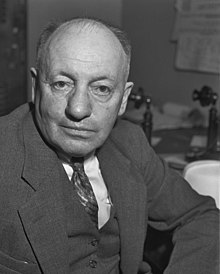
There is a deep mystery behind Spalding which may never be solved. The brief Wikipedia article the photo is taken from is evidently written by a ‘true believer’, and to be historically factual would need a lot of rewriting [5].

He had definitely never been to India before 1935, and he was not old enough to have been on any journey to India in “1894”. As his friend David Bruton states in his biography, Spalding advanced his age by two years upon every birthday to try to make it appear that he was old enough to have made such a journey [6]. He’d long planned to write Volume 1, though he had never himself been to the East. He wrote the first volume, and upon its unexpected success, the publisher asked him to write a second and then a third volume by virtue of the fact that, in the publisher’s eyes, they made more money for him than the rest of De Vorss’ books put together. If asked almost any question at all, Bruton tells how Spalding seemingly impulsively never replied truthfully, even about innocuous daily things.

As another means of making money, publisher DeVorss arranged for Spalding to be the guide for a party of spiritual tourists, who paid for the journey, to take them to India in 1935, yes, but soon after arrival it started becoming clear that Spalding had no knowledge or experience of India at all. (Anyone who does know India can tell that from the books, imho.) The travelling companions had frankly expected to meet at least one Master, but Spalding kept making poor excuses.

Genuine British mystic, Dr Paul Brunton, writes of how he came across Spalding and his disgruntled party. Mystic Paul Brunton (not to be confused with friend and biographer David Bruton) was India-experienced, and saw through him. so Spalding finally admitted to him that his India travelogues “dealt with visits made in his astral body, not in his physical body, as readers were led to believe”. There was a showdown with his traveling companions, upon which Spalding basically ran away, turning up weeks later at the docks, penniless, to get back to the USA. One of the fellow-travelers paid for his passage back.

A great deal more along these lines can be read about Spalding, and I would advise the researcher to read his one biography, Baird T. Spalding As I Knew Him by his genuine friend, David Bruton. It’s full of mysteries and puzzles, and a good read by itself. I do find that ‘true believers’ find all this hard to accept, yet they need to read further such as in Bruton’s book. Bruton is no critic, and not trying to debunk, simply to tell the real truth. By the time Volume 1 of “Life and Teachings” came out in 1924, there were plenty of esoteric/occult sources from which the gist of such a tale could have been concocted, particularly Theosophy, but many other sources too.

However, one major part of the mystery is that since Spalding was never in India before 1935, and was too young to have been there in 1894, nevertheless his books are certainly packed with spiritual truths, even if the actual events are fictitious. His books have inspired generations of readers nonetheless, doing great good, and therein lies their undoubted value. (By the way, publisher DeVorss must surely have swindled him, since he died with only $15 to his name, apparently.)

I like a portion of David Bruton’s introduction to his biography, in which he says, in as many words (my copy isn’t to hand), “No matter the reality or not, or the real nature of his stories, it cannot be taken from Baird that he did indeed inspire many thousands of people, for which he should be remembered.”

I am writing this post on a very coincidental day, because just today I received the latest edition of the books (!), which simply contains Volumes 1 to 3, later volumes being poor efforts of the publisher to just keep making more money and of little value. The first three volumes are now newly published as one book, with the new title, The Journey (2021), still by the same publishing house, but the initial publisher himself, DeVorss passed on in 1953. They have been honest enough now, today, to give this brand-new book a 14-page Introduction by Mitch Horowitz, academic of American occultism, who comes clean on the real life-story of Spalding [7].

I would just say, take Spalding’s works as ever one wishes, but the 1894 journey never took place. The supposed backing establishment confirms that. If one wishes, one can think of his accounts as being overshadowed by some spiritual force, or, in any case, at the very least by his own spiritual knowledge, and perhaps by even more. It is certainly not my wish to pop any balloons, but Truth Above All must be our guide.

So if anyone really wants to follow-up on this, you can start with David Bruton’s 1954 biography, and the recent 2021 14-page introduction to the latest edition.

Sources

[1]. Spalding, Baird T. 1924-1997. Life And Teachings of the Masters of the Far East. Vols. 1-6. Los Angeles: DeVorss & Company.

[2]. Wiki entry: Carlos Castaneda.

[3]. De Mille, Richard. 1976. Castaneda’s Journey: The Power and the Allegory. Santa Barbara, CA: Capra Press.

[4]. Blavatsky, H. P. 1889 (1920). The Key to Theosophy: An Exposition on the Ethics, Science, and Philosophy of Theosophy. Los Angeles, CA: The United Lodge of Theosophists.

[5]. Wiki entry: Baird T. Spalding.

[6]. Bruton, David. 1954. Baird T. Spalding As I Knew Him. Los Angeles: DeVorss & Company.

[7]. Spalding, Baird T. 2020. The Journey: Life And Teachings of the Masters of the Far East. Reprint in one volume of Life And Teachings of the Masters of the Far East, vols. 1-3. With introduction by Mitch Horowitz. Los Angeles: DeVorss & Company. (Amazon, where you can read the Horowitz intro)


The Next Financial Crisis is around the Corner?


Introduction

We know that the current monetary system is crisis-prone. We know that during the last big crisis in 2008 we skirted a total freeze-up and a possible break-down of the international banking system. We know that Wall Street was bailed-out and Main Street left to fend for itself. We know the system received some band-aids and was not re-set on a sound footing. And now we see another series of big booms and possible big busts, starting with the implosion of crypto-giant FTX in November 2022 and recently the bankruptcy of SVB.

Maybe a good quote to set the table for some warnings is the following from economists Dirk Bezemer and Michael Hudson (2016: 761):

An economy based increasingly on rent extraction by the few and debt buildup by the many is, in essence, the feudal model applied in a sophisticated financial system. It is an economy where resources flow to the FIRE sector [Finance, Insurance & Real Estate] rather than to moderate-return fixed capital formation [the productive economy]. Such economies polarize increasingly between property owners and industry/labor, creating financial tensions as imbalances build up. It ends in tears as debts overwhelm productive structures and household budgets. Asset prices fall, and land and houses are forfeited.

Different sources make it clear that we might be close again. Below is a little collection of economists and financial commentators ringing the bell with a postscript on the Silicon Valley Bank bankruptcy in March 2023.

Nouriel Roubini, aka Dr. Doom

Dr. Doom in 2007 was on the forefront of warning the world that the time was ripe for a big correction, if not crisis. He’s back again.

The chairman and chief executive officer of Roubini Macro Associates, nicknamed Dr. Doom following his 2008 prediction, warned that anyone expecting a shallow US recession should examine the extensive debt ratios of corporations and governments.

Roubini added that as rates increase and debt servicing costs grow, “many zombie institutions, zombie households, corporates, banks, shadow banks and zombie countries are going to die” (Boughedda).

Later Roubini himself opened his analysis in an article with:

The world economy is lurching toward an unprecedented confluence of economic, financial, and debt crises, following the explosion of deficits, borrowing, and leverage in recent decades (Roubini).

“Recession is a certainty in 2023, but how much will it hurt India?”

This article in India Today carries lots of colorful graphs to see that the world will get into a recession in 2023 and that “various financial crises” will accompany it. When the World Bank and the IMF think there will be a recession this might be interpreted that it will actually pack out worse.

A new World Bank study shows that central banks across the globe raising interest rates to curb inflation may not be a good idea. This can likely lead to various financial crises along with the recession. “Global growth is slowing sharply, with further slowing likely as more countries fall into recession. My deep concern is that these trends will persist, with long-lasting consequences that are devastating for people in emerging markets and developing economies,” said World Bank Group President David Malpass (Sharma).

“Why The Banks Are Collapsing”

A reasonably good video comes from a somewhat alarmist web site analyzing five reasons why we can expect some or many big banks to collapse. The video is sponsored by a dubious company selling titles like ‘Lord’ and ‘Lady’ in Scotland.

1) Collateral Debt Obligations, 2) Corruption, 3) Collateral Loan Obligations, 4) Overconfidence, 5) Recession.

We can argue with this list as #5 Recession is more of an effect than a cause of bank behavior. And, though they mention it, Moral Hazard, the idea that banks expect that they will be bailed out anyway, should have its own entry. And what is totally missing is an analysis of the leading cause of financial crises and that is the allocation of easily created loans by commercial banks to the unproductive FIRE sector creating thereby asset bubbles which usually pop.

Trouble in Cryptoland

In November 2022 the crypto currency exchange platform FTX went bankrupt after a classic bank run with depositors withdrawing $6 billion. Crypto-giant and rival Binance might have triggered the run by withdrawing from FTX after revelations about a murky relationship between FTX and a sister company Alameda. Binance then thought of buying and bailing out the platform, but changed its mind in a day.

How far this bankruptcy will reverberate through cryptoland and the banking world is anyone’s guess but it is already dragging in its wake a few other outfits and the wipe-out of about $2 trillion in market value. And after FTX filed for bankruptcy hackers got away with $515 million. Some think this is a Lehman moment, which started the GFC in 2008, others compare it with the 2001 collapse of Enron. Regulators are expected to step in, which might scare more people into selling, creating more havoc, and justifying more regulation (Yaffe-Bellany; Wiki entry of FTX).

The inequality-crisis nexus: Its origin and application to India

I stumbled upon prominent Indian economist Raghuram Rajan as one of the few who warned his peers at the 2005 Jackson Hole, Wyoming gathering of top bankers and their regulators, that the financial system had become potentially more crises-prone because of deregulation, innovation, dangerous incentives to bank managers and some other flaws (Rajan, 2006).

He said the rollout of complicated instruments such as credit-default swaps and mortgage-backed securities made the global financial system a riskier place. Indeed, he argued that such developments “may also create a greater – albeit still small – probability of a catastrophic meltdown” (Cooper).

Rajan was then chief economist at the IMF. Later he became governor of the Reserve Bank of India (RBI), Vice-Chairman at the Bank for International Settlements (BIS) and is now back in academia at the University of Chicago.

After the crisis he came out with an award-winning book, Fault Lines (2010), making the case that inequality had increased the debt burden of households. The logic was that households, in order to keep up with spending while income shrank, took on debt to make up for the difference. Rajan also thought that the US government was incentivizing mortgages too much, also leading to a growth in debt. For this he was criticized as it looked he was blaming the victims of the GFC. Summarizing Rajan’s position:

Much of the impetus for the current debate stems from Raghuram Rajan’s widely discussed book ‘Fault Lines’ (2010). Rajan argues that low and middle income consumers have reduced their saving and increased debt since income inequality started to soar in the United States in the early 1980s. This has temporarily kept private consumption and employment high, but it also contributed to the creation of a credit bubble. With the downturn in the housing market and the sub-prime mortgage crisis starting in 2007, the overindebtedness of U.S. households became apparent and the debt-financed private demand expansion came to an end in the ‘Great Recession’ of 2008/9 (Van Treeck, 2013: 421).

How this nexus might apply to India is next and starts with a picture of inequality in India.

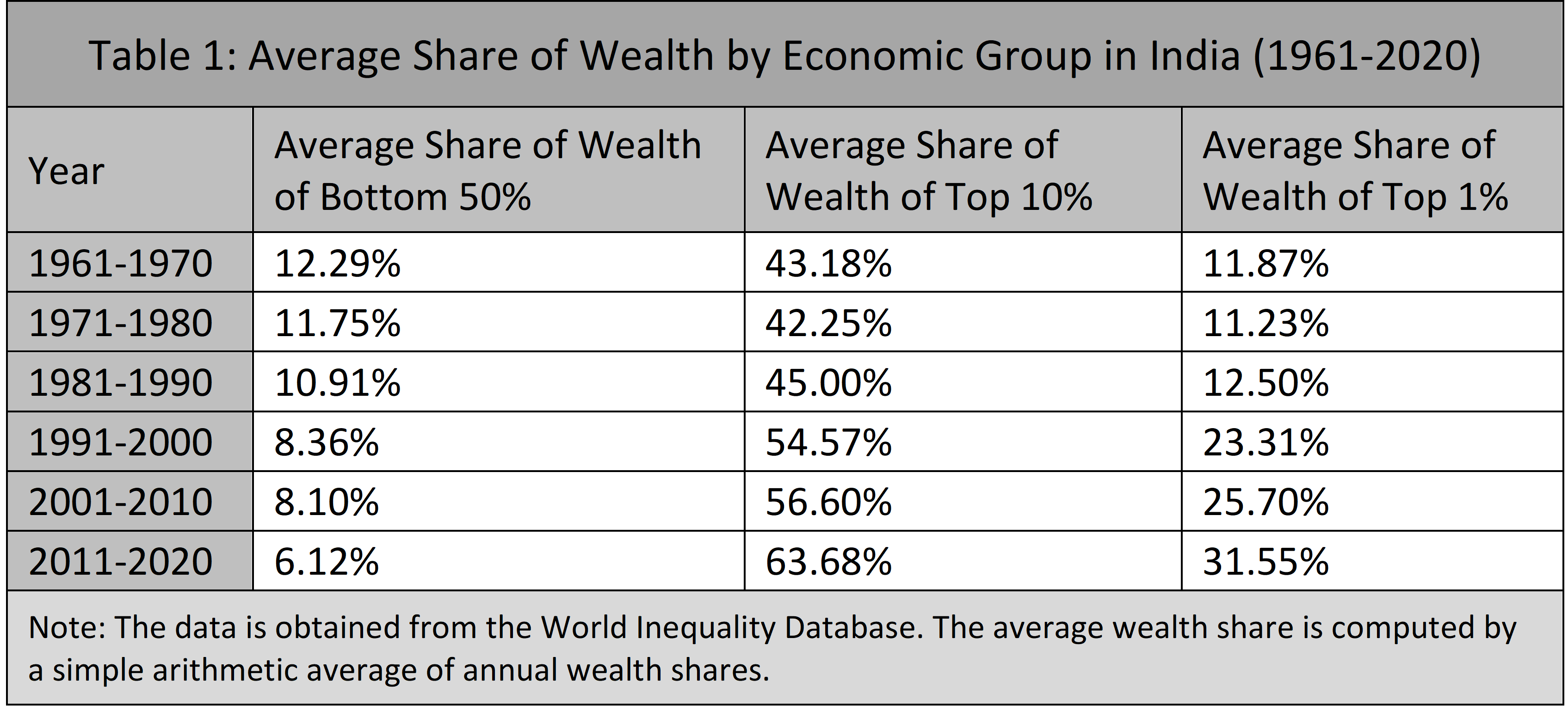
For example, data from the recently published “World Inequality Report 2022” suggests that inequality – of both income and wealth – in India kept increasing in the last few decades and that this trend has continued even in recent years. In particular, after 1990, the share of the national income of the top 10% and top 1% has consistently increased while the share of the national income of the bottom 50% has consistently declined.

The article comes with a table which makes the trend over six decades painfully clear (Gathak, 2022).

Next step is to look at the trend in bank lending in the form of retail loans and mortgages.

According to data released by RBI, the bulk of the increase in bank lending has been on account of retail loans, with credit card outstanding, consumer durables and loans against fixed deposits being the new drivers of growth in FY22.

. . . . Individuals continue to borrow for consumption even as corporations have deleveraged and paid their loans (Shetty, 2022). 

But what are the causes of this increase of indebtedness? Increased consumer optimism? Easier access to loans? Or the relative income hypothesis? This hypothesis is based on the idea that consumption patterns are related to the perception and valuation of one’s relative socio-economic position in one’s environment. It combines the desire of ‘keeping up with the Joneses’ during boom times and trying to keep up with your own previous peak consumption during downturns. The relative income hypothesis is a component of the Rajan hypothesis of causally connecting inequality with financial fragility.

Though I have anecdotal and observed evidence from the US for Rajan’s hypothesis, I am not sure how it would work out in India. The first thing to find is some correlation between increased inequality in India and increased indebtedness, and then see if causal connections can be made. But this project is too big to pursue here.

Postscript

Meanwhile in March 2023 a potentially humungous crisis was temporarily averted after two US banks went bankrupt and were taken over by different authorities. Silicon Valley Bank (SVB) in California ($209b) and Signature Bank in New York ($118b) are now the second and third biggest bank failures in US history after the record-setting failure of Washington Mutual ($307b) in 2008. Though 97% of deposits at SVB and 90% at Signature were not insured, the US government regards the crisis as a systemic risk and will guarantee all deposits in newly formed ‘bridge banks’. Throughout the crisis stock markets stayed relatively calm, but some banks took big hits with shares of Republican Bank going down 60%. The price of safe-haven gold increased about 5%.

Some Tremors in India

SVB’s troubles created also concern in India because many Indian start-ups and high-net-worth individuals have big accounts at SVB.

Indian startups that have millions of dollars stuck with the troubled Silicon Valley Bank are waiting for business hours in the US to resume Monday and could withdraw all their money from the bank en masse. The only thing that could stop that is if the US government manages to find a buyer for the beleaguered bank, founders said (Barik).

Little did anybody know that US regulators would step in with guarantees.

Ellen Brown

Again, what is next is anybody’s guess, though some of our allies in the monetary reform movement think it can be dire.

For example Ellen Brown of the Public Banking Institute warns that again we are facing the collapse of the derivatives house of cards. This time the derivatives used as a hedge against interest rate changes will come into play. She writes about “The Interest Rate Shock” which will ripple through the system.

Interest rate derivatives are particularly vulnerable in today’s high interest rate environment. From March 2022 to February 2023, the prime rate (the rate banks charge their best customers) shot up from 3.5% to 7.75%, a radical jump. Market analyst Stephanie Pomboy calls it an “interest rate shock.” It won’t really hit the market until variable-rate contracts reset, but $1 trillion in U.S. corporate contracts are due to reset this year, another trillion next year, and another trillion the year after that.

A few bank bankruptcies are manageable, but an interest rate shock to the massive derivatives market could take down the whole economy (Brown).

Steve Keen

Another warning comes form Australian economist and author Steve Keen. He blames the actions of the Fed in raising interest rates while ignoring its effects on the financial sector. He thinks that the Fed uses models in which debt, banks and money are ignored. The causal chain is that increased interest rates will diminish the value of bonds, of which many banks have massive amounts on their books.

Meanwhile, in the real world, rising interest rates on government bonds can cause banks to go insolvent. SVB was the canary in the coal mine here, but the factor that brought it undone is shared by all financial institutions, because government bonds are a major component of their assets. When interest rates rise, bond values fall, and this can drive financial institutions into insolvency—where their Liabilities exceed their Assets (Keen).

In his own Minsky Model he shows that the financial sector as a whole might get into negative equity territory if interest rates hit 5%. That is, the whole sector can go belly-up. Though he states his scenario is more hypothetical and educational than a real-world plausibility, the lesson he wants to convey is that,

It’s The Fed that deserves to be roasted instead, for attempting to manage the financial system using models that ignore banks, debt, and money.

Michael Hudson

Famed author and economist Michael Hudson addresses both of the above mentioned dangers, i.e. a) the effect of increased interest rates on the value of bonds and in turn its effect on the equity position of banks, and b) the looming danger of derivatives. On the interest rate he states that,.

Prices are plunging for bonds, and also for the capitalized value of packaged mortgages and other securities in which banks hold their assets on their balance sheet to back their deposits.

The result threatens to push down bank assets below their deposit liabilities, wiping out their net worth – their stockholder equity.

Like others, he wondered “why the Fed doesn’t simply bail out banks in SVB’s position”, but that question has just been answered by the regulators with their decisive intervention fully guaranteeing all deposits.

The issue with derivatives he thinks is the “larger elephant in the room”.

Volatility increased last Thursday and Friday. The turmoil has reached vast magnitudes beyond what characterized the 2008 crash of AIG and other speculators. Today, JP Morgan Chase and other New York banks have tens of trillions of dollar valuations of derivatives – casino bets on which way interest rates, bond prices, stock prices and other measures will change.

According to Hudson we are getting into really dangerous territory:

So far, the stock market has resisted following the plunge in bond prices. My guess is that we will now see the Great Unwinding of the great Fictitious Capital boom of 2008-2015. So the chickens are coming home to roost – with the “chicken” being, perhaps, the elephantine overhang of derivatives fueled by the post-2008 loosening of financial regulation and risk analysis.

By the way, the two above economists have written some of the most hard-hitting and provocative criticisms of how the economics discipline is mis-theorized by their peers through ignoring the role of money, banks and the money creation process. From Hudson we have J Is For Junk Economics, and Keen wrote Debunking Economics.

Alternatives

In the six years after the 2008/9 Global Financial Crisis (GFC) the monetary reform movement has attained far-reaching results in promoting breakthrough monetary theories, especially the credit creation theory of money and banking, and in proposing reform policies based on empirical findings and computer models.

Many central and commercial banks admitted the truth about money creation and through citizen’s initiatives many popular assemblies had to discuss the findings and proposals. In Switzerland it even came to a referendum.

Our ideas are still spreading and are picked up in many countries to the extent that monetary reform organizations have been started. Even so, main stream economists, politicians and policy think tanks are resisting our findings or stay blissfully ignorant of them. Hopefully this half-panic around SVB’s downfall will create questions about the current crisis-prone, unsustainable monetary system and awaken the vision that a more stable, more equitable and less indebted system is possible.

Sources

Anonymous. 2022. “Why The Banks Are Collapsing: The Coming Economic Crisis”. Moon YouTube Channel, Nov 2022.

Barik, Soumyarendra. 2023. “Indian startups with millions of dollars stuck in Silicon Valley Bank weighing en masse withdrawal”. Indian Express, 13 March 2023.

Bezemer, Dirk & Hudson, Michael. 2016. “Finance is not the economy: Reviving the conceptual distinction ”. Journal of Economic Issues, 50/3: 745-768.

Boughedda, Sam. 2022. “Nouriel Roubini, “Dr. Doom,” Expects a Severe, Long and Ugly Recession – Bloomberg”. Investing.com, 20 Sept 2022.

Brown, Ellen. 2023. “The Looming Quadrillion Dollar Derivatives Tsunami”. The Web of Debt Blog, 13 Mar 2023.

Cameron, Cooper. 2015. “6 economists who predicted the global financial crisis”. In the Black, 7 July 2015.

Gathak, Maitreesh et al. 2022. “Trends in Economic Inequality in India”.The India Forum, 19 Sept 2022.

Hudson, Micheal. 2017. J Is For Junk Economics: A Guide To Reality In An Age Of Deception. Dresden, Germany: ISLET Press. (Amazon)

Hudson, Micheal. 2023. “Why the Banking System is Breaking Up“.12 Mar 2023.

Keen, Steve. 2011. Debunking Economics: The Naked Emperor Dethroned? London: Zed Books. (Amazon)

Keen, Steve. 2023. “Silicon Valley Bank: The Fed’s Role in its Downfall”. Patreon, 11 Mar 2023.

Rajan, Raghuram G. 2006. “Has finance made the world riskier?.” European Financial Management, 12/4: 499-533. 

Rajan, Raghuram G. 2010. Fault Lines: How Hidden Fractures Still Threaten the World Economy. Princeton, New Jersey: Princeton University Press.

Roubini, Nouriel. 2022. “The Unavoidable Crash“. Project Syndicate, 2 Dec 2022.

Sharma, Samrat. 2022. “Recession is a certainty in 2023, but how much will it hurt India?” India Today, 12 Oct 2022.

Shetty, Mayur. 2022. “Individuals borrow more, corporates deleverage”. Times of India, 5 Sept 2022. 

Trading Economics. 2022. Graph of Households Debt in India in Percentage of GDP, 2009-2022. Derived from the Bank of International Settlements.

Van Treeck, Till. 2014. “Did inequality cause the US financial crisis?” Journal of Economic Surveys, 28/3: 421-448. 

Wiki entry: FTX (Company)

Yaffe-Bellany, David. 2022. “Embattled Crypto Exchange FTX Files for Bankruptcy”. New York Times, 11 Nov 2022.

Extra: https://www.visualcapitalist.com/ftx-leaked-balance-sheet-visualized/

Troubles in Scotland of the East


It might not have made it to the international news platforms, but we have had a disturbing series of events happening in Meghalaya. Let me recount.

The effects of an inter-state incident last Tuesday early morning at the Assam-Meghalaya border between Assam police and Meghalaya citizens resulting in six dead (one Assam forest official and five Meghalaya locals), are still rippling through the state. It happened in or just outside the village of Mukroh in the district of West Jaintia Hills, about a 4 hours and 125 km drive east from Shillong. Out of respect for the dead and to prevent social unrest the state government cancelled all festivals, which is too bad because November–with its pleasant, dry and sunny weather and cherry trees blossoming–is festival month. The state also partially shut down the internet for 48 hours, which was later criticized for good reasons by an editorial in the Shillong Times. Unexpectedly I was able to stay on-line and receive updates and reports through WhatsApp and news platforms.

One unfortunate side-effect was that on that very Tuesday NEHU, the non-profit SEHER and the central government in Delhi had an international music festival organized with bands from Singapore, Indonesia, Myanmar and one local band. A similar but larger event had succesfully taken place a few days before in Delhi with the same bands to celebrate 30 years of diplomatic relations with the Association of South-East Asian Nations (ASEAN). Lots of work, money and planning had gone into this. I was part of it, one day driving with a group of volunteers all over Shillong to eleven colleges to distribute invitations. Unfortunately exams were going on and the principals we met were reluctant to let students go to the fest. Still, one of the principals, a very nice man I had met before, together with a friend who teaches there, gave us the best welcome with tea and cookies.

Maybe because the event was on our relatively safe and gated campus the organizers from the Office of International Affairs at NEHU tried to keep it going. Even though it was at 1:30 pm that I received the first message via WhatsApp that all festivals were cancelled (and for a moment believed the rumor that it actually was a fake news message regurgitated from 2018), I heard that the organizers proceeded as if everything was still on while conferring with authorities. I was fine with that not realizing that the early morning incident would have such a wide impact. My big question throughout the day and later was if the state and the NEHU officials had overreacted.

Around 2 pm I was seated with some other volunteers inside the venue in one of the front rows next to the entrance when a group of activist student union members came in their black clothes, black masks and scarfs and black flags, which they planted in the pots next to the entrances. That looked pretty intimidating though I didn’t know then if there was a connection with the border incident. A group of six of them were allowed inside and they walked in front of the podium as if checking out the situation. Meanwhile one of the bands was doing its sound check. This might have been the MRTV Modern Music Band from Myanmar, which sounded, like the other bands, very promising. Later I heard that the students had demanded the cancellation to be effectuated. Apparently there was a scuffle outside between them and some organizers and I did hear a professor on the phone yelling “get our people here”, as if he had access to a group of students or security personnel to counter the student union.

We were still seated when one of the organizers from Delhi–the chair of the non-profit SEHER, which organizes festivals on behalf of the central government–passed by and thanked us for our volunteer work. I politely stood up, shook his hand and talked with him. He seemed not to know what was going on, even that the festival was probably cancelled. This was around 3 pm, an hour before the event should have started with an official opening. So, I told him and he was understandably a bit miffed, as I was a bit perplexed. Later I got flack for having told him, which I’m still in the dark about.

I then walked off with a little group of volunteers to an adjacent part of the campus. To somewhat bemused consternation I dropped one of my rare F-bombs. We visited the complex of unused bio-domes, used to house a butterfly park, which now looked both post-apocalyptic and photogenic. It was constructed in 2019 but probably abandoned because of Covid. We were all uncertain about what had happened and very sad about the cancellation. Some had planned to go back home for a few days, but would not travel for safety reasons. The concern was especially for students from Assam. One of them thought she might be beaten up.

For me and my African friend’s protection we were put on the bus around 4 pm with the last performers, the singer-songwriter Linying and her band from Singapore, having done their sound check, and drove back to the guest house where they were staying.

The organizer from Delhi was there too and I conveyed my condolences for what had happened, gave my obviously fake apologies for having informed him, and talked with him about the effects of the cancellation. He was very distraught and saddened and thought it was a set-back for his long-term project to have India look more to its south-east neighbors and what they can offer, starting with music. It was also a sad set-back for NEHU and Meghalaya. Which international bands would like to come? I suggested everybody interested watch some world cup football or have a small acoustic concert or jam with the musicians at the guest house. This never happened, but still heard later that despite the unfortunate developments our guests had a good time.

I did talk to some of the Indonesian musicians of the fusion band Rhiau Rhythm from Sumatra. Asked them if they knew the little town Lahat on Sumatra, which they did. Told them my father had been born there and apologized for my grandfather’s colonialist impact when the Dutch were in control, which they received with a good laugh.

I went back to my place, which is next to the guest house. Unexpectedly I still had access to the internet and received raw video footage of the shooting, and first news reports and government communications about what had happened at the border. That story is still not totally clear as more detailed versions became available correcting previous ones. I did watch some World Cup matches and got news that a car with Assam plates had been set on fire in Shillong and that further unrest was expected. Now the ripples started looking a bit scary.

Days later I heard that a tourist car had been pelted with stones by teenagers and that there was an attempt to set a bus on fire. Some political groups have held peaceful rallies in Shillong to commemorate the dead and protest the non-resolution of the ongoing problems at the border. They are demanding more protection for the locals from intrusions by Assam police and border personnel. Afterwards some incidences of violence were reported.

Then the union of petrol truck drivers refused to drive petrol from Assam to Meghalaya without further safety measures, which caused a panic with long lines at petrol pumps. With added escorts this seem to have been resolved. Taxi drivers’ associations of Guwahati and Shillong, whose members drive between the two towns, but are not driving that stretch now, also demand resolution to border issues otherwise they’ll strike next week. Then a trainee customs official from outside the state was seriously injured in a mob attack in Shillong.

The latest news is that the state has extended by 48 hours mobile access to the internet (I still have access both on phone and laptop) and Assam authorities have advised Assamese not to travel to Meghalaya as the situation is not good there. Meanwhile Delhi sent four groups of paramilitary forces to the affected border area to help law enforcement keep law and order. No other incidents were reported and Monday Shillong ‘limped back to normalcy‘.

What other ripples to expect is unclear, but the weather is still very pleasant, and positive plans for the future concerning international student relations are set in motion. We also should be able, after everything has calmed down, to watch one day the Shillong rock band Colours in concert. They were the last band on the program and deducing from video footage, would have closed the festival in a dancing frenzy. I missed that workout as I was on the dance card of some dance and music lovers.