Dreamworld Tibet: Western Illusions
Martin Brauen
 (Trumbull, CT, USA: Weatherhill, 2004)
First published as Traumwelt Tibet: Westliche Trugbilder
(Berne: Verlag Paul Haupt, 2000)
Part 2
In Search of ‘Shambha-la’ and the Aryan Lamas:
The Tibet images of the theosophists, occultists, Nazis and neo-Nazis
(excerpt; pp. 24-37; pagination in square brackets;
footnotes and relevant bibliography at end of document)
===
A. The Theosophists and some of their followers
An Aryan brotherhood
For centuries we have had in Thibet a moral, pure hearted, simple people, unblest with civilization, hence—untainted by its vices. For ages has been Thibet the last corner of the globe not so entirely corrupted as to preclude the mingling together of the two atmospheres—the physical and the spiritual.1
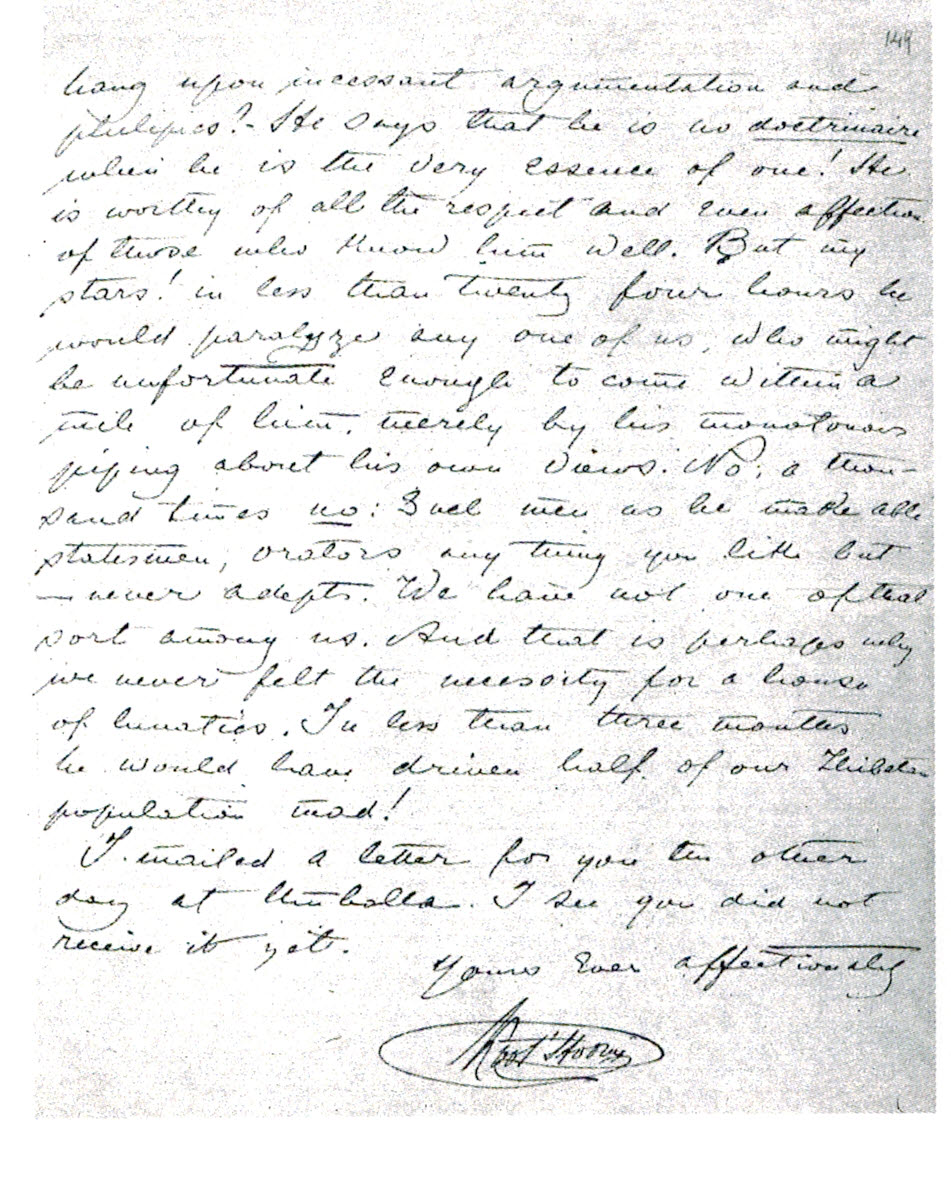
These lines were ascribed to Koot Hoomi, who was said to have belonged to a secret brotherhood in Tibet. Like other supposed ‘brothers’ in Tibet, he was most closely linked with Helena Petrovna Blavatsky (1831-1891), the founder of Theosophy. The first meeting of HPB (we shall frequently use this abbreviation for Helena Petrovna Blavatsky below) with her ‘Master’ goes back to the year 1851, but as so often in Blavatsky’s biography, there exist various accounts, sometimes contradictory, of this first meeting.
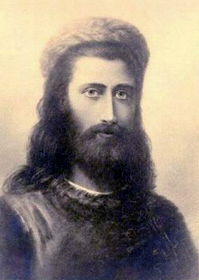
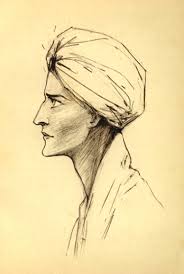
 17. Master Koot Hoomi Lal Singh, who was said to have been Pythagoras in a previous incarnation and to have lived in Shigatse during Helena Blavatsky ‘s lifetime. Many of the mysterious letters that Helena Blavatsky and other Theosophists received by miraculous means are supposed to originate from him.
Her Master, called Morya, was a member of an Indian or Nepalese delegation that stayed for some time in London. When she met him, ‘a tall Hindu’, in London—or according to another version, in Ramsgate—she immediately recognized in him the person who had often appeared to her ‘in the Astral’, that is to say, in her astral, non-corporeal form. The very next day she met him again in Hyde Park. In the course of this he is supposed to have disclosed to her that he had come to London on an important mission with some Indian princes and wanted to meet her personally, because he needed her co-operation for a task he wished to tackle. He told her at this meeting how the Theosophical Society was to be formed and that he wished HPB to found the Society. Morya also asked her to travel to Tibet and live there for three years, to prepare herself for her important task.2
In 1856 HPB traveled to India, because she longed for the Master she assumed was in Tibet. She risked everything to cross the Tibetan border—apparently first from Darjeeling, then also from North-west India via Leh (Ladakh). The attempts were unsuccessful—even if, as some Theosophists were to claim, Blavatsky reached Leh and at best even Mongolia.
In 1868, after Master Morya had again appeared to her in Florence, HPB tried once more to reach Tibet, and in the view other supporters her efforts were definitely crowned with success, for from the autumn of 1868 until the end of 1870 she lived in the neighbourhood of Tashi Lhünpo Monastery in Southern Tibet. There Blavatsky was received by her Master Morya and one of his friends, Koot Hoomi. According to Blavatsky these two were not Tibetans, but Indians, who knew Europe and spoke English, and Koot Hoomi even French. Morya was a Rajput by birth,
one of the old warrior race of the Indian desert, the finest and handsomest nation in the world … a giant, six feet height, and splendidly built; a superb type of manly beauty.3
Koot Hoomi, a Kashmiri Brahmin, who had studied in Leipzig, welcomed to his house Tibetan scholars ‘who wore the yellow cap of the Gelugpas’. The most advanced scholar was Djwal [25] Khool, who later achieved fame as ‘the Tibetan’ at the time of Alice Bailey.
HPB was regarded as the chosen one who was to carry to Europe and the USA the secret knowledge of the sages living the other side of the Himalaya, in Tibet, ‘to gradually prepare the way for others’. In a letter ascribed to Koot Hoomi appears:
This state of hers [Blavatsky’s] is intimately connected with her occult training in Tibet, and due to her being sent out alone into the world to gradually prepare the way for others. After nearly a century of fruitless search, our chiefs had to avail themselves of the only opportunity to send out a European body upon European soil to serve as a connecting link between that country and our own [Tibet].4
In other words, the Masters living in Tibet, ‘the custodians of the Ancient Wisdom’, had recognized HPB’s special abilities and wished to appoint her as an intermediary between Tibet and Europe, just as they had already done before with certain chosen Western men, such as Robert Fludd (Rosicrucian, spiritual father of Freemasonry, 1574-1637), Thomas Vaughan (physician and alchemist, 1622-1666), Paracelsus (1493-1541), Pico della Mirandola (Italian humanist and philosopher, 1463-1494) and Count Saint Germain (occultist and alchemist, 1685—1784). They, like the other chosen, were so-called ‘chelas’ [Skt/Hindi: servants, disciples], who had declared themselves ready ‘to learn practically the “hidden mysteries of Nature and the psychical powers latent in man.'” For this a chela needed a guru,
an Adept in the Occult Science. A man of profound knowledge, exoteric and esoteric, especially the latter;5
to whom he had to be totally devoted. In the view of the Theosophists, these ‘Masters’ or ‘Mahatmas’ are not gods but simply links with the divine plane. At the top of this strictly hierarchical system reigns ‘The Lord of the World’, who lives in Shamballa in the Gobi Desert. Under him are his helpers, such as Buddha, Manu and Maitreya, each of whom has a Master as assistant. These Masters are simple, saintly mortals,
nonetheless morally, intellectually and spiritually higher than all others in this world. However saintly and developed they are,… they are still men, members of a brotherhood that goes back to pre-Buddhist times …,
that is, ascetics who had ‘the good Doctrine even before the days of [the Buddha] Sakya-muni’ and have lived for time immemorial on the other side of the Himalaya [Tibet]. In prehistoric times they preferred to remain in their inaccessible and unidentified hiding places, instead of migrating to the South (i.e., India) like others of them. The adepts living in Tibet are linked with those in Egypt, Syria and Europe,6 and are
beings who have at their disposal powers far surpassing human measure, and for whom time and space play only a limited role.7
The Masters are also supposed to have the ability to materialize themselves, i.e., to ‘condense’ themselves in a temporary body in far-distant places for a short or a longer time, and then ‘evaporate’ again. It seems the Masters are exclusively men, although Colonel Olcott, who was very close to HPB, once conceded that there were also women in Tibet with remarkable powers—he had even communicated with them—but he could not say whether they were Mahatmas.8 [26]

18. Master Morya—allegedly a Rajput prince, and in an earlier incarnation Akbar, thereat Mogul of India in the 16th century— is supposed to have lived in Shigatse. According to her own statements, Helena Blavatsky met her Master for the first time in 1851. He was a member of an Indian or Nepalese delegation that stayed for some time in London. When she saw him, ‘a tall Hindu’, she immediately recognized him as the person who had often appeared to her ‘in the Astral’, that is to say, in her astral, non-corporeal form. Morya revealed to her that she was to found the Theosophical Society, and asked her to travel to Tibet to prepare herself for the important task.
The (fictitious) Tibet journeys of Helena Blavatsky
Although the Theosophists have tried time and again to provide evidence for a long stay by HPB in Tibet—altogether she is supposed to have spent seven years there—it remains beyond doubt, not only that she never lived in the neighbourhood of Tashi Lhünpo, but even that she probably never trod on actual Tibetan soil. There are certain indications that HPB stayed in the region of Darjeeling and reached as far as Sikkim, where she met Tibetans and Bhutanese. From here no doubt came also her evident aversion to the Duk-pa9 and the ‘Shammars’—by which she surely meant the Sha-mar-pa, a subgroup of the Ka-gyud-pa. Blavatsky calls them ‘the Red Capped Brothers of the Shadow’,10 adherents of the Bon religion, ‘a religion entirely based on necromancy, sorcery and sooth-saying’.11 They would also ‘lead Europe’s best minds into the most insane and fatal of superstitions—Spiritualism’.12 She accused the ‘Dugpa’ of being sorcerers and damage-causers and of fighting the Gelukpa (the reformed school within Tibetan Buddhism). One of their infamous methods involved leaving at dangerous points of paths ‘bits of old rag … impregnated with their evil magnetism’ by the Dugpa. When a wayfarer stepped on one, it could communicate to him an enormous psychic shock, so that he might lose his footing and fall down the precipice.13

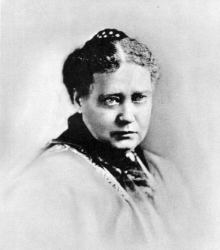
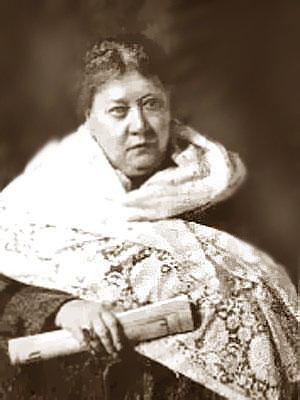
19. Helena Petrovna Blavatsky (1831-1891), co-founder of Theosophy, described herself as a ‘Thibetan Buddhist’, who had already as a child been quite familiar with the ‘Lamaism of the Tibetan Buddhists’. She was regarded as a chosen one, who was supposed to carry the secret knowledge of the sages living the other side of the Himalaya in Tibet to Europe and the USA. She was called by her admirers ‘the white yogini of the West’, ‘a messenger of the light’ or ‘the most remarkable woman of our century’.
There are many reasons to suppose that HPB did not ‘arrive in the forbidden land of Tibet hidden in a hay-cart’, to learn Sanskrit from the Masters there and be initiated into occult knowledge. For one thing, there is the fact that none of the quite numerous people who to travelled Tibet had heard of the Indian Masters in the region of Tashi Lhünpo, or indeed seen them. In addition, Blavatsky’s descriptions of Tibet are exceedingly rare and superficial, and—the most important argument—the explanations presented as Tibetan by the Masters and HPB are at best reminiscent of Tibetan wise sayings, but are mostly a matter of gross distortions or ‘teachings’ that have next to nothing in common with Tibetan Buddhism. HPB, who herself claimed that she was a ‘Thibetan Buddhist’,14 evaded authentic ancient knowledge without a qualm, when it did not suit her. In Blavatsky’s numerology the number seven has quite a special meaning. In Tibetan Buddhism, however, groups of five frequently occur. No problem for HPB: in the case of the five ‘Dhyani-buddhas’ (actually Tathagatas), she claimed that in esoteric Buddhism there were seven of them. But as she could not deny the existence of five Tathagatas, she explained that this grouping belonged to ‘exoteric’ (i.e., outer or ordinary) Buddhism.15 She got round the Buddhist theory of five human ‘components’ (heaps, Skt skandha) similarly: for her the human being was made up of seven constituents or principles,16 a transitory tetrad and an intransitory triad—a theory she probably borrowed from the medieval secret teachings of Agrippa of Nettesheim and Paracelsus.17 As evidence that the Tibetan Buddhists also supported this theory, she promptly provided Tibetan and Sanskrit names for the seven [27] constituents, but thereby drew criticism from Indologists, who pointed out discrepancies and errors.18

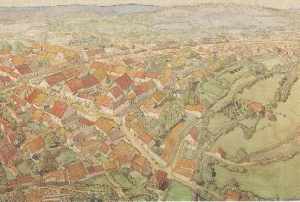
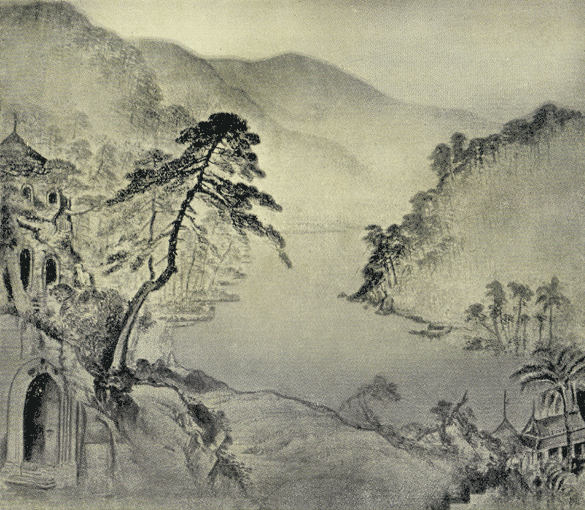
20. Although the Theosophists have repeatedly tried to produce evidence that Helena Blavatsky stayed for a long time in Tibet, it remains beyond doubt that she never trod on actual Tibetan soil. This is also indicated by this picture, which is supposed to depict the valley in which HPB visited the Masters. The arched gateways on the left of the picture are extremely untypical of Tibet, and the vegetation too—especially the palm-like tree in the bottom right-hand corner—in no way fits Tibet. The prayer-flags typical of Tibetan dwellings are missing, and nowhere can one see a stupa or any other distinctive Buddbist feature, such as a Wheel of the Doctrine flanked by two deer or a mani-wall, as one would expect in a Tibetan Buddhist area.
The interpretation of the Master’s name also gave considerable difficulty: it suggested neither a Tibetan nor any other Buddhist origin. Morya could if need be be related to (Chandragupta) Maurya, as HPB seems to have suggested, a ruler who was in fact not Buddhist but Jaina. But why should Morya, who Blavatsky said was a Rajput and Sikh, have had a Jain name?
The valley too, in which the Masters or Brothers supposedly lived, is to be found in China rather than in Tibet. There exists a picture of it, which Djwal Khool is supposed to have painted. The style of painting and the architecture recall China, the arched gateways on the left of the picture are extremely untypical of Tibet, and the vegetation too, especially the palm-like tree in the bottom right-hand comer, in no way fits Tibet. The prayer-flags typical of Tibetan dwellings are missing (a single flag can indeed be made out on the roof of the left-hand house, but it has nothing in common with a Tibetan prayer-flag), and nowhere can one see a stupa (a typical Buddhist religious structure) or any other distinctive Buddhist feature, such as a Wheel of the Doctrine flanked by two deer or a mani-wall, as one would expect in a Tibetan Buddhist area.
One must have a certain sympathy with HPB’s position, that the Masters had non-Tibetan names because they were Indians living in Tibet. But what about the teachings transmitted by the sages? If one analyses the letters ascribed to the Masters, as well as some writings by HPB in which she refers to Tibet, the yield is extremely meager. There is hardly one Tibetan term correctly interpreted, and only a little of the essential content of Tibetan Buddhism is explained. Amongst the allegedly Tibetan terms mentioned now and then are in [28]

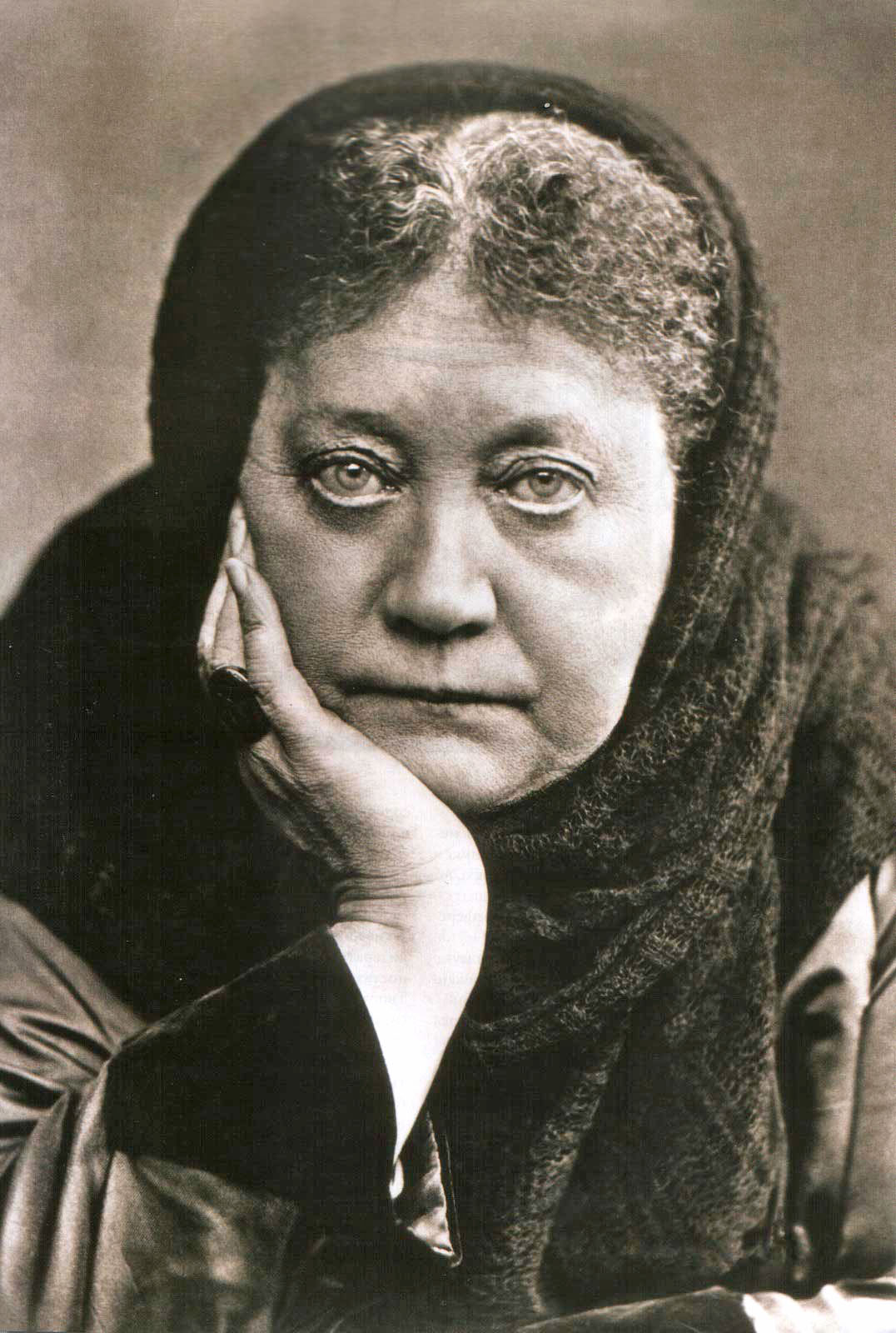
21 (above), 22 (p. 29). Helena Blavatsky often lived in her own world, mysterious to those outside, and had trouble distinguishing between reality and her own subjective perceptions. What she experienced in her imagination she interpreted as reality—and this laid the foundation for many Tibet stereotypes of the present day.
particular ‘Chohan Lama’, the superior of Koot Hoomi, and the books Kiu-te and Dzyan. Neither Chohan nor Dzyan is demonstrably a Tibetan word. By Kiu-te HPB surely means rGyud-sde, the Tantric texts within the bKa’-‘gyur text collection. She had probably read the term in a text by the Capuchin Orazio della Penna, in which some books called Khiute are mentioned. Delia Penna said they gave instructions for magical practices and other harmful things and set out the shortest, but rugged and unsafe, way to holiness. The book Dzyan, supposed to have been written in the unknown language ‘Senzar’, was spelled by HPB in the most varied ways (Dan, Jan-na, Dzan, Djan, Dzyn or Dzen), and the translation of the book title comes out similarly vague also: ‘Mystical meditation’ or ‘Occult (divine) Knowledge’. According to Blavatsky the first volume concerns the ‘incredibly ancient commentaries of the seven secret books of the Kiu-te‘, which contained archaic doctrines concerning the origin and construction of worlds and races. The book, which HPB had allegedly seen in an underground monastery in the Himalaya,19 forms the basis of her great work, The Secret Doctrine, but it has not yet been possible to find and identify it either inside or outside Tibet.20 As far as the secret language ‘Senzar’ is concerned, this is supposed to be used by all adepts the world over as a language of mysteries—however, since Helena Blavatsky it has never come to light either in Tibet or anywhere else.
HPB calls the Chohan Lama
the chief of the Archive-registrars of the libraries containing manuscripts on esoteric doctrines belonging to the Dalai and Tashi-lhunpo Lamas … than whom no one in Tibet is more deeply versed in the science of esoteric and exoteric Buddhism,21
truly the Tibetan authority! But where we would expect some clarification about the Chohan Lama, we find instead mystification and obfuscation.
For Blavatsky, ‘the Lamaism of Tartary, Mongolia, and Tibet’ was the purest Buddhism;22 in fact, her readers learn about it little that is concrete, and a great deal that is false. Thus in her Collected Writings one finds completely untenable interpretations of the word ‘Lama’ —
‘Lama’ means path or road in the vulgar Tibetan language
—and the name ‘Tibet’ —
the land of the Wisdom Deity, or of the incarnations of Wisdom.23
In her Tibetan Teachings one finds more Buddhist terms, such as Ho-pahme (Öpame = Amitâbha), Bodhisattwa, Alaya Vijnâna and Kwan-yin, but one cannot avoid the impression that they have been noted down by free association and without a plan. And Tibetan Teachings is especially concerned with a petty settling of scores with two authors: Arthur Lillie (Buddha and Early Buddhism) and Orazio della Penna.24 If one remembers that in the Tibetan Teachings HPB professes to be proclaiming not her own opinion, but that of the venerable Tibetan Chohan Lama, then one inevitably asks oneself whether this most erudite lama had nothing better to do than keep struggling with publications appearing in Europe, and how it came about that he had a good command of a European language.
Evidently HPB settled scores in this way with authors she did not like. That is, she let other [29] authorities, Tibetan or Indian, speak, so as to feign substance and credibility. Basically it is a matter of HPB’s thoughts and words. Was HPB conscious of this? Was she, as has repeatedly been claimed, a confidence trickster? Or was she convinced that others—in this case the Chohan Lama, one of the Mahatmas—were proclaiming their views and using her as a medium to do so? This is a hard question to answer, but there are some indications that HPB suffered from a split personality, of which she was probably not aware. HPB often lived in her own world, mysterious to those outside; had trouble distinguishing between reality and her own subjective perceptions; heard voices; felt she was the object of plots and conspiracies: in short, she had symptoms that are typical of schizophrenia. These schizoid characteristics of HPB’s may explain the following passage from a letter from her sister Vera:
Madame Blavatsky was taken very ill… It was one of those mysterious nervous diseases … Soon after the commencement of that illness, she began—as she repeatedly told her friends—to ‘lead a double life’. … This is how she herself describes that state:’Whenever I was called by name, I opened my eyes upon hearing it, and was myself, my own personality in every particular. As soon as I was left alone, however, I relapsed into my usual, half-dreamy condition, and became somebody else … When somebody else, i.e., the personage I had become, I know I had no idea of who was H.P. Blavatsky! I was in another far-off country, a totally different individuality from myself, and had no connection at all with my actual life.’ 25
In other places HPB describes rather unclearly an ‘operation’ by which apparently the soul of a living being was released from its body. This operation was carried out by the ‘Brothers’— likewise a reference to her split personality:
They have operated on me, and I once slept for eleven weeks, believing myself to be awake the whole time and walking around like a ghost … without being able to understand why no one appeared to see me and to answer me. I was entirely unaware that I was liberated from my old carcase which, at that time, however, was a little younger. That was at the beginning of my studies.26
This could have been an account of the grave illness that HPB suffered in the period of her life about which we possess the most contradictory or very inaccurate information, and in which she was allegedly living in Tibet. Even an author favourably disposed towards her thinks:
There is a hiatus [in knowledge] between the years following her marriage (July 7,1849) up to the date of her coming to America to commence her work in the world (July 7, 1873).27
This is a period of over twenty years and, note well, the period in which among other things Blavatsky is alleged to have been in Tibet! The first letter from the Masters, a letter addressed to HPB’s aunt, Mme de Fadeyev, spoke other grave illness and at the same time announced that HPB, believed missing, would soon turn up again. In other words: thanks to the Masters, in Tibet HPB became a new person, learnt the ancient knowledge preserved there and was now bringing it to the West. Blavatsky’s recovery, Blavatsky’s cure, came (allegedly) from Tibet. [30]

The mysterious letters
It is a particularly interesting question how, in the view of the Theosophists, the letters from the Masters reached their recipients, as the mode of transmission provides information on the powers and abilities the Theosophists attribute to the Masters from Tibet. As so often, the Theosophists’ answer is nebulous and complex. One theory started from the assumption that the Masters made the letters they had written disintegrate into tiny particles, which joined together into the original document again at the destination. Letters from the sages of Tibet are supposed often to have arrived on HPB’s desk overnight by this means, and in many cases the letters allegedly dropped onto the table beside the recipient, ‘as it were “out of nothing'”.28 There is also mention of ‘photographic reproduction from one’s head’,29 or that the document was moved by the ‘transmitter’ line by line via the stars, holding his breath until a ringing made it known that the letter had been read and noted down at its destination. According to another view, to be rematerialized in another place the letter had to be burned in a ‘virgin flame’, lit not by a match, sulphur or any preparation, but by rubbing with a small, resinous, translucent stone, which no bare hand must

23. Helena Blavatsky claimed she was in continual contact with her Masters, living in Tibet. She or other Theosophists, she said, received letters from the Masters, whom she also called Brothers. These letters did not arrive at their destination by normal post, but by supernatural means. One theory assumes that the Masters got their letters to disintegrate into tiny particles, whereupon they reunited into the original document at the destination. Other letters were moved by the ‘transmitter’ line by line via the stars, until a ringing made it known that the letter had been read and noted down at the destination. On another view, the letter was burned in a ‘virgin flame’, and rematerialized at the destination. As if these interpretations were not enough, Helena Blavatsky described the transmission of the letters as ‘a sort of psychological telegraphy’: the Master clothes his thoughts in words and transmits them mentally along astral currents to the receiving pupil. From the latter’s brain the thoughts are carried by his nerves to his fingertips, which are resting on some magnetically prepared paper, on which the thoughts are then noted down.
touch. As if these interpretations were not enough, in The Theosophist in 1893 HPB described the transmission of the letters as:
a sort of psychological telegraphy … An electromagnetic connection, so to say, exists on the psychological plane between a Mahatma (Master) and his chelas (disciples), one of whom acts as his amanuensis. When the Master wants a letter to be written in this way, he draws the attention of the chela, whom he selects for the task, by causing an astral bell to be rung near him … The thoughts arising in the mind of the Mahatma are then clothed in words, pronounced mentally and forced along the astral currents he sends towards the pupil to impinge upon the brain of the latter. Thence they are borne by the nerve-currents to the palms of his hands and the tips of his fingers, which rest on a piece of magnetically prepared paper. As the thought-waves are thus impressed on the tissue, materials are drawn to it from the ocean of akasha (permeating every atom of the sensuous universe) by an occult process … and permanent marks are left.30
This description of ‘psychic telegraphy’ leads us back to HPB’s early youth. Every night for six years, from about the ninth to the fifteenth year of her life, the spirit of a Mrs T.L. came to write through HPB in the presence of her father, her aunts and many other people,
in clear, old-fashioned, curious handwriting and grammar, in German (a language which I had never learned and could not even speak well) and in Russian.
As HPB emphasized, T.L. was not a dead person, as was initially suspected, but was living in Norway. HPB understood herself as a medium not for the spirits of the dead but for the living. The [31] origins of the mediumistic letter-writing of the ‘Brothers’ working in Tibet are therefore to be found in HPB’s younger days. And it is to be assumed that most of the letters of the ‘Brothers’ were written by HPB herself. In the view of the Theosophists, however, it was a matter of ‘psychic telegraphy’, an occult action that the (Indian) sages in Tibet have mastered.
The following passage from a letter to her sister Vera demonstrates what probably ‘happened’ with HPB when she wrote her letters, or the Mahatmas’ letters:
Someone comes and envelops me as a misty cloud and all at once pushes me out of myself, and then I am not ‘I’ any more—Helena Petrovna Blavatsky— but someone else. Someone strong and powerful, born in a totally different region of the world; and as to myself it is almost as if I were asleep, or lying by not quite conscious,—not in my own body but close by, held only by a thread which ties me to it.31 However, at times I see and hear everything quite clearly: I am perfectly conscious of what my body is saying and doing—or at least its new possessor. I even understand and remember it all so well that afterwards I can repeat it and even write down his words …32
We can assume that the Mahatma letters render what HPB saw and heard in moments in which she was—as described above—’outside herself’, was someone else, and apparently that ‘someone’ was one of the Masters. HPB in fact wrote to her aunt:
It seems strange to you that a Hindu Sahib comes like an intruder … into my house [body] … When his double, or the real Sahib leaves temporarily his vehicle, the body is left in a similar state to that we can observe in a calm idiot. He orders it either to sleep or it is guarded by his men. At first it seemed to me that he pushed me out of my body, but soon I seemed to become accustomed to it, and now during the moments of his presence in me, it only seems (to me) that I am living a double life. I am learning only now to leave my body; to do it alone I am afraid, but with him I am afraid of nothing.33

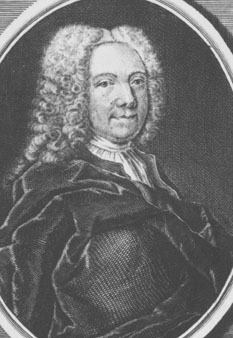
24. Emmanuel Swedenborg (Swedish scientist and mystic, 1688—1772). His writings, in which he claimed that the ancient teaching existed in Great Tartary (Tibet?), also influenced Helena Blavatsky.
Fascination with Tibet
Why did Blavatsky feel so drawn by Tibet and India? What fascinated her so much? HPB wrote that as a child she was already well acquainted with the ‘Lamaism of the Tibetan Buddhists’.
I spent months and years of my childhood among the Lamaist Kalmucks of Astrakhan and with their high priests … With an uncle of mine … I had visited Semipalatinsk and the Urals, on the border of the Mongolian lands where the ‘Terakhan Lama’ resided, and made numerous excursions beyond the border and known all about lamas and Tibetans, before I was fifteen.34
Apart from this direct contact with ‘Lamaists’, HPB was undoubtedly strongly influenced by the body of thought of the so-called Rosicrucians, a mysterious secret brotherhood whose supposed founder, Christian Rosenkreutz, is a fictitious character, invented like HPB’s Tibetan Brothers.
But where should a brotherhood be established, whose existence began to be doubted when no one ever managed to see them? Sensibly, in a completely isolated, inaccessible place. Tibet seemed suitable, for Heinrich Neuhaus, one of the [32]

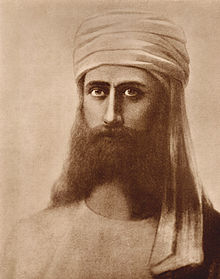
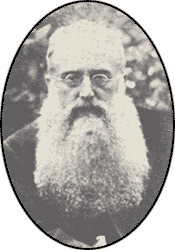
25. Although some Theosophical circles disapproved of pictures of the Masters, since they were only interpretations by the relevant artist and in no way lifelike portraits, there do exist some depictions of them. This portrait shows the Tibetan Chohan Lama, Koot Hoomi’s superior and another Master who here looks more like an Indian priest than a Tibetan one.
original Rosicrucian pamphleteers, suggested that the Brothers had settled in India and Tibet.35 Emanuel Swedenborg also (Swedish scientist and mystic, 1688-1772), told his disciples that the ancient teaching was in Great Tartary, where perhaps it could still be found. It is debatable, however, whether Great Tartary actually meant Tibet, or more likely Outer Mongolia.36
Blavatsky must have taken up and extended these theories. She was certainly also strongly influenced by English occult novels, especially by Edward Bulwer-Lytton (English novelist, 1803-1873), whose work she knew well, and by Eliphas Levi (Alphonse-Louis Constant, well-known French occultist and esoteric writer, 1810-1875). W.E. Coleman was able to prove that HPB copied from around a hundred books, which mainly had as their subject ancient and exotic religions, teachings on demons, Freemasonry and spiritualism.37
‘Ever on the lookout for occult phenomena, hungering after sights,’38 Blavatsky was extremely fascinated by the marvels that were attributed to the Tibetans among others. Thus, for example, she was familiar with the account of Huc and Gabet (whom she seems otherwise not to have liked very much) that in the monastery of Kumbum in North-eastern Tibet there stands a legendary tree that goes back to the year the reformer Tsong-kha-pa first had his head shaved, at the age of three, and displays a Tibetan letter on every one of its leaves. She sharply dismissed the critics of this legend—without having seen the tree or its leaves herself.39
Blavatsky also wrote with pleasure of the child prodigy, a claimed incarnation whom she is supposed to have met ‘about four days journey from Islamabad,’ apparently in Ladakh. This infant of three or four months, who was placed on a bit of carpet in the middle of the floor, suddenly jerked upright and then stood on his feet ‘erect and firm as a man’, and spoke the words: ‘I am Buddha; I am the old Lama; I am his spirit in a new body.’40 Even a perpetually carping and doubting sceptic, a positivist, learned better through this experience…
HPB believed the ability to undertake aerial journeys in one’s own ‘astral body’ was particularly developed in Tibet; she was convinced of the phenomenon of levitation, the neutralization of gravity and as a result of this the floating of the body, and wrote of the proverbial longevity of many lamas, which was put down to their using a chemical compound that ‘renews the old blood’, as the lamas themselves put it.41 We shall see that all these occult abilities that Blavatsky attributed to the Tibetans belong even today to the stock caricature of Tibet. They have survived up to the present and been ‘reincarnated’ in, for example, comics, feature films, novels and advertising.
Blavatsky’s familiarity with ‘Lamaism’,42 going back to her childhood, the theory already current of a brotherhood living in Tibet and India, and the Tibetan legends, which contain much that is occult and mystical, may explain why HPB was so interested in Tibet and described it as the place of origin of the ancient wisdom. In the face of this enormous interest in Tibet it is astonishing that only three or four Tibetans actually appear in Blavatsky’s writings: the Chohan Lama, Ten-dup Ughien, Djwal Khool (whose nationality is [33] in fact disputed) and, in the inaccessible distance, the Panchen Lama. This led Poul Pedersen to the conclusion:
that there were no Tibetans on the global religious and spiritual scene where the Theosophists were acting … Tibet and the Tibetans were, in the Theosophical teaching, purely imaginary objects, all made up from various sources .. .43
Alice Bailey and ‘the Tibetan’
Not only did H.P. Blavatsky refer to Tibet and Masters living in Tibet, but one of her female followers, Alice A. Bailey (1880-1949), also had contact with the Masters and after 1919 even had an allegedly genuine ‘Tibetan’ as a permanent companion in life.44
Bailey had her first meeting with a Master— at that time it was just the Indian Koot Hoomi—when she was fifteen.
The door opened and in walked a tall man dressed in European clothes … but with a turban on his head …
As the years went by I found that at seven years intervals (until I was thirty-five) I had indications of the supervision and interest of this individual. … I found that this visitor was the Master K.H., the Master Koot Hoomi, a Master Who is very close to the Christ, Who is on the teaching line and Who is an outstanding exponent of the love-wisdom of which the Christ is the full expression.45
In November 1919 she came in contact for the first time with her personal Master. Bailey was sitting on a hill,
and then suddenly I sat startled and attentive. I heard what I thought was a clear note of music which sounded from the sky, through the hill and in me. Then I heard a voice which said, There are some books which it is desired should be written for the public. You can write them. Will you do so?46
Bailey declined. After three weeks she was spoken to again and let herself be persuaded to try for a few weeks. The few weeks turned into over twenty-five years.
Who her personal Master was remained for a long time a closely kept secret, until Bailey herself first published his name: it was Djwal Khool, ‘the Tibetan’, the former disciple of Koot Hoomi, who was supposed to have lived as his teacher near the monastery of Tashi Lhünpo in southern Tibet.
Bailey did not think of herself as the author of her books, but would simply ‘register and write down the thoughts … as He dropped them into my mind.’ The protagonist was ‘the Tibetan’, and Bailey saw herself as his helper and secretary. As Bailey feared she could be injured through this activity, she turned to her Master K.H., who however reassured her: it had been he himself who had suggested Bailey to the Tibetan. Since her discussion with K.H., Bailey wrote many books for the Tibetan and over the years developed their own technique of—telepathic—communication. The final responsibility for the texts, however, as Bailey could not emphasize enough, lay with the Tibetan.
After all, the books are His, not mine, and basically the responsibility is His … I have published exactly what the Tibetan has said.47
Although Bailey called him Tibetan, what he allegedly dictated had little Tibetan about it. No work of Bailey contains Tibetan teachings or allows a Tibetan to be recognized as its author.
Who was Alice Bailey?
A quite unimportant woman who was forced (usually against her will) by circumstances, by an actively intruding conscience, and by a knowledge of what her Master wanted done, to undertake certain tasks,48
Bailey once said of herself. Bailey was a victim of the strict Victorian age,
a life of discipline, rhythm and obedience, varied occasionally by spurts of rebellion and consequent punishment.49
She suffered from the dogma that the world was divided into two parts,
into those who were Christians and worked hard to save souls, and those who were heathen and bowed down to images of stone and worshipped them. The Buddha was a stone image; and it never dawned on me then that the images of the Buddha were on a par with the statues and images of the Christ in the Christian churches … I was in a complete fog. And then—at the height of my unhappiness and in the very middle of my dilemma and questioning—one of the Masters of the Wisdom came to me.50
Bailey had found deliverance from ‘the narrowest kind of Christianity’ in the form of a Master from distant Tibet, who was later to be joined by a real Tibetan. Her deliverance came from Tibet. [34]
The Theosophists’ image of Tibet
Theosophy and Tibet are fatefully linked together: essential Theosophical teachings were supposed to have come from Tibet; Blavatsky claimed to have studied the occult knowledge of an age-old wisdom teaching in Tibet; she described herself as a Tibetan Buddhist; the Mahatma letters, so important for the development of Theosophy, came from Tibet (in fact, most were written by non-Tibetans); the book Dzyan, which formed the basis of The Secret Doctrine, was according to HPB a Tibetan book; and HPB’s followers referred to Tibet again and again. Without Tibet Theosophy would scarcely be conceivable. But what sort of image of Tibet did the Theosophists have? It was a Tibet without beggars ‘nor people dying from hunger’, where ‘drunkenness and crime are unknown, as well as immorality’, a Tibet with ‘a moral, pure hearted, simple people,’ untainted by the ‘vices of civilization’; a land where ‘the two atmospheres, the physical and the spiritual,’ still existed side by side and together; a land in which the people were so honest that the shopkeepers would return to their unlocked shops to find all their wares untouched—or money on the counter for articles taken.51 Tibet, ‘the very land of mystery, mysticism and seclusion’,52 occult, shrouded in mystery; where ‘the custodians of the Ancient Wisdom’ evoke ‘powers and potencies which are at present not only unknown to the Western world, but are dormant as well’;53 a region where ‘the atmosphere and human magnetism [are] absolutely pure and—no animal blood is spilt’;54 in short, an imaginary, transfigured, Utopian and unreal Tibet, which HPB wished fate might protect from the charity of civilization and especially from missionaries. This Tibet, as we know today, had little in common with the actual Tibet.55
The special achievement of Theosophy did not, in today’s view, lie in the transmission of detailed knowledge about Tibet or other countries and religious traditions, for ‘such a mixture of unbelievable rubbish and inane esotericism’ (Bharati) was not suited for that. Its value lay in demonstrating that there were entirely different and remarkable ways of living and thinking besides the puritanical Victorian lifestyle and Christianity—not only in Ancient Greece or Egypt, but also in Asia, in far-off Tibet among other places. Theosophy made it possible to break out of the tight corset of the Victorian age. It demonstrated alternatives, for example in the field of ethics, that were taken up again around a hundred years later by the New Age movement and pursued further. Then all of a sudden, in place of far distant Masters telepathically imparting (allegedly) Tibetan knowledge to the West, there were real Tibetans standing in front of you. Now meeting a Master was no longer the exclusive privilege of a Helena Petrovna Blavatsky, but every Tom, Dick and Harry had the chance of hearing from an authentic mouth what HPB had transmitted in garbled fashion. The Masters now revealed themselves to every seeker.

26. The achievement of Theosophy did not lie in the transmission of detailed knowledge about Tibet. Rather, Theosophy demonstrated that there existed quite different ways of thinking that were worthy of consideration, besides Christianity—especially in Asia. Thus the social reformer Colonel Olcott helped Buddhism in Sri Lanka (Ceylon) get new blood and thereby strengthened the process of shaping a national identity.
Theosophy did not only demonstrate alternatives to Christianity, but was also a ‘revolt against positivism’.56 Not only what was scientifically secure should be valid, but also such ‘self-evident truths’ as rebirth and the theory of karma, a ‘belief’ also adopted by the New Age movement of the 20th century, which has many [35] similarities with Theosophy.
Another achievement of the Theosophists—particularly of the social reformer Colonel Olcott—that should not be underestimated was that in Sri Lanka (Ceylon) they helped Buddhism gain new blood and thereby strengthened the process of shaping a national identity. Olcott and Blavatsky’s visit to Ceylon in 1880 thus became a significant event for the Buddhists of Ceylon. For the first time, members of the then ruling race came to the country, who were not spreading the Christian faith but wanted to promote the Buddhist religion. The ensuing foundation of the ‘Buddhist Theosophical Society’—which actually had very little ‘Theosophical’ about it and stood instead for a new type of Buddhism—contributed considerably towards stemming the influx of Christian schools into Ceylon.57
In general, Theosophy knew how to break down prejudices with regard to Hindus and Buddhists in India and Ceylon and to demonstrate that there were also other religious options besides Christianity. Or, in the words of the Indologist Glasenapp:
Despite all criticism of the frequently chaotic fantasy and the strange outward history of the Theosophical Society, it must on the other hand be granted that even with the imperfections attaching to them, they brought home to wider circles in the West, for the first time and with great success, Indian trains of thought and Indian books such as the Bhagavadgita—circles that would never have been reached by more scientifically sound and less sensationally presented works and endeavours.58
And according to Pedersen, the Theosophists did not only strengthen the interest of the West in Asiatic religions and philosophies:
Perhaps more important was their introduction of Western interpretations of Eastern traditions to the educated Asian elites.59
Roots of racism
Blavatsky, like other Theosophists also, encouraged a racist body of thought—connections that have scarcely been examined up to now.60 The basis of this racist doctrine was a theory of evolution, getting its bearings from Hinduism and Buddhism, according to which living beings develop from a lower state to a higher (with temporary steps backwards being part of the norm), over extremely long periods of time, until the most highly developed state is reached, after which a cycle starts again from the beginning.
In this Theosophical evolutionary plan, the majority of human beings alive today—Chinese, Malayans, Mongolians, Tibetans, Hungarians, Finns and Eskimos—belong to the ‘Fourth Root-Race’.61 In this period of the fourth root race, in which the miraculous power ‘vril’ was developed, the islands of Atlantis and Lemuria were submerged, along with a great many living beings. A few chosen people, however, escaped this great catastrophe and reached a beautiful island in the Central Asian sea of that time, which lay where the Gobi Desert is today, and corresponded to ‘the “fabled” Shambhallah’. The island could not be reached by sea, but there were underground passages, known only to the highest, that led in all directions. At the same time,
some of their accursed races, separating from the main stock, now lived in the jungles and underground (‘cave-men’), when the golden yellow race (the Fourth) became in its turn ‘black with sin.’… The demi-gods of the Third had made room for the semi-demons of the Fourth Race. … the White Island had veiled her face. Her children now lived on the Black land .. 62
During this ‘degeneration of mankind’ the nucleus of the fifth root race was formed in Shambhala (for around a million years). The first subrace of this fifth race was formed by the Indian Aryas, and the fifth and therefore higher subrace was the whites.
In the course of the degeneration of the fifth root race, which will begin in the middle of their cycle, will arise the sixth root race. They will live once more on Lemuria and Atlantis, which will have risen again, purified.63
Each root-race reaches its evolutionary maximum at its midpoint, when a racial cataclysm occurs and the race begins to decline. At the same time the seeds of the succeeding root-race appear, and the new root-race in its infancy begins to run parallel with the race that is declining, so that there is continual overlapping.64
According to this theory, at the moment the Aryan whites and the Indian Aryas clearly stand at the highest point in the hierarchy of evolution. They are above the descendants of the fourth root race, who are apparently also subdivided into higher (Chinese, Tibetans, etc.) and lower spheres (who are ‘black with sin’). This racism supported [36] by Theosophy still more clearly pervades the following passage from a letter, supposedly written by Koot Hoomi (but probably by Blavatsky):
I told you before now, that the highest people now on earth (spiritually) … are the Aryan Asiatics; the highest race (physical intellectuality) is … yourselves the white conquerors. The majority of mankind belongs to … the fourth Root race,—the above mentioned Chinamen and their off-shoots and branchlets (Malayans, Mongolians, Tibetans, Javanese, etc., etc., etc.) …—and the seventh sub-race of the third race. All these, fallen, degraded semblances of humanity are the direct lineal descendants of highly civilized nations neither the names nor memory of which have survived ,..65
Among these ‘inferior races’, HPB also counted the Australian aborigines and some African and Oceanic tribes,66 who were regarded as ‘wild’ in contrast to the highly cultivated and civilized. Her racial theory was somewhat qualified, in that even the Africans could ‘form the bulk of the civilized nations’, if Europe were to disappear and they gave up their isolation and were scattered on the face of the Earth.67
The doctrine of racial development sketched here, supported by HPB, was a strong impulse for Ariosophy, a kind of ‘Germanized Theosophy, whose core is a dualistic doctrine of race’.68 Thus for example, Guido von List (1848-1919), influenced by HPB’s The Secret Doctrine, combined volkisch ideology with occultism and Theosophy.69 Jorg Lanz von Liebenfels (1874-1954) too was intensely preoccupied with the Theosophist racial doctrine, which, he said, plausibly demonstrated that the heroic Aryas mistakenly got mixed up with animals, through which the original races, the Chandalas, arose,
who are therefore so dangerous, because they have blond-blue blood in their veins, and that is why the Asiatic race became so dangerous an enemy.70
Pennick leads us to the topic of Tibet once more, when he mentions the reasons why, in his opinion, the Theosophical writings contain many seeds of the Nazis’ racist ideology:
Both the Theosophists and the Nazis had connections with Tibetan esoteric schools, so it is not surprising that we find similar themes in both systems.71
Tibet therefore once again becomes the place of origin of an abstruse ideology, in this instance, indeed, an ideology contemptuous of mankind. The perfidy lies in the fact that this myth is disseminated in a book whose author claims in the introduction to belong to the guild of professional historians.72
But to return to the Nazis: we shall see below that some Nazis, prompted by the Theosophists, tracked down the origin of the Aryan race in Asia—whether actually or only in the fantasy of the neo-Nazis remains for the moment an open question—which will lead us into the undergrowth of the legends about Thule, Atlantis and Shambhala.
We shall also pursue the question of whether an (ultimately) racist theory of evolution does not lie at the bottom of the positive image of Tibet so widespread today, assigning Tibetan culture to the so-called high cultures and thereby to a supposedly higher stage of human development.
And if the Theosophical influence on the precursors of National Socialism is a fact, should Blavatsky’s writings not be condemned here in their entirety? It should simply be shown how HPB’s Theosophy influenced National Socialist esotericism, volkisch occultism and likewise National Socialism’s racial theory. We can also not hide the fact that in later documents of Theosophy it says their goal is to form a universal brotherhood of mankind, without distinction of race, faith, sex, social stratum or skin colour, but this formulation dates from the year 1896,73 that is to say, it was written down five years after Blavatsky’s death. It is not included in the original code of rules from the time of the foundation of the Theosophical Society in 1875.74
As already mentioned, Jorg Lanz von Liebenfels also allowed himself to be demonstrably influenced by Blavatsky in his ‘sexo-racist gnosis’.75 In one important point, however, Blavatsky differs from Lanz von Liebenfels: Blavatsky also dreamed of a new race, but she saw its source not in Germany, nor in an ‘Aryo-Christian area’, but in America. ‘When shall this be?’ she asks in The Secret Doctrine:
Who knows save the great Masters of Wisdom, perchance, and they are as silent upon the subject as the snow-capped peaks that tower above them.76
The Tibetan sages also apparently know more than anyone else about this secret.
Helena Petrovna Blavatsky, who was called by her admirers ‘the white yogini of the West’, ‘a messenger of the light’, or ‘the most remarkable woman of our century’,77 influenced not only [37] National Socialist occultists but also a number of personalities seriously interested in religion, and left her mark on their Tibet images: Alexandra David-Neel, W.Y. Evans-Wentz, Lama Anagarika Govinda and, in particular, Nicholas Roerich. Donald Lopez said of them that:
First, they mystified Tibet, embellishing the realities of Tibet with their own mystical fancies, and, second, they mystified their readers, playing on the credulity of the reading public.78
When Lopez speaks of playing with the public, he is suggesting that the authors in question deliberately sought to deceive their readers, an assessment that will not be shared here. However, I am in agreement with Lopez that these authors did introduce their own mystical fantasies (also) into their works and drew, at least in places, a greatly transfigured image of Tibet. This can be shown clearly from Nicholas Roerich.
===
Footnotes to Part 2 (pp.250-252) and relevant bibliography
1. Barker (1926) (all references to this source are to the online edition): Letter No. 98. The recipient of this letter was Alfred Percy Sinnett, a journalist. After initial scepticism, H.P. Blavatsky had found a ‘Brother’ in Tibet, who wrote Sinnett letters regularly from then on.
2. Constance Wachtmeister, Reminiscences of H.P. Blavatsky and ‘The Secret Doctrine’; quoted in Barborka 1969:17-18.
3. Blavatsky, Collected Writings, Vol. VII: 398; quoted in Barborka 1969:242.
4. Barker (1926): Letter No. 26.
5. Blavatsky: ‘Chelas and Lay Chelas’, in Collected Writings, Vol. IV: 606; see <http://www.katinka hesselink.net/lay.htm>.
6. Echoes from the Past, in The Theosophist, October 1907: 77, according to Cranston 1995: 119 (German edition, quotations retranslated).
7. Lauppert 1954: 11 (quotation retranslated from German).
8. An interview with Colonel Olcott, in The Daily Chronicle, London, 14 September 1891.
9. Whether H.P. Blavatsky had in mind the Bhutanese or the members of the Ka-gyüd-pa sub-school called the Druk-pa, or both, is unclear.
10. Barker (1926): Letter No. 49.
11. Blavatsky, Collected Writings, Vol. IV: 15 note.
12. Barker (1926): Letter No. 49.
13. Barker (1926): Letter No. 66.
14. Pedersen 2001: 153.
15. Blavatsky, Secret Doctrine, Vol. I: 571 ft.
16. See Fuller 1988, Chap. 40.
17. Glasenapp 1960: 199.
18. See for example Glasenapp 1960.
19. Goodrick-Clarke 1985: 19; according to Frick 1978: 280, in a rock library that was chiselled into the wall of a ravine.
20. Frick 1978: 281 cites an author Hoffmann, who claims that Dzyan was of Taoist origin.
21. Blavatsky, Collected Writings, Vol. VI: 94-95.
22. Barborka 1969: 124.
23. Blavatsky, Collected Writings, Vol. Ill: 178, 180.
24. Probably Blavatsky only knew about the short report, which was printed in Markham 1879.
25. A.P. Sinnett, Incidents in the Life of Mme. Blavatsky, quoted in Barborka 1969: 351-2.
26. The Complete Works of H.P. Blavatsky, Vol. II: 46, quoted in Barborka 1969: 120.
27. Barborka 1969: Preface.
28. Lauppert 1977-82: Vol. 1: 166 (quotation retranslated from German).
29. Fuller 1988: 179.
30. H.P. Blavatsky in The Theosophist, Vol. V, December 1883/Januaryl884.
31. This ‘thread’ is probably the ‘silver cord’ that will be described more precisely in Section 3.2.2, Rampa’s Tibet image, pp. 94-96.
32. The Path, Vol. IX, No. 9 (December 1894): 266, quoted in Barborka 1969: 357.
33. H.P.B. Speaks, Vol. I: 224-5, quoted in Barborka 1969: 365-7.
34. Neff 1937, pp.1-2, Chapter 1 (retranslated from the German version).
35. Washington 1993: 39.
36. Swedenborg n.d., Vol. 2, number 266.
37.William Emmette Coleman, 1895, The Source of Madame Blavatsky’s Writings, in Vsevolod Soloviev, A Modern Priestess of Isis, London.
38. Blavatsky, Isis Unveiled, Vol. 2: 609.
39. Blavatsky, Collected Writings, Vol. IV: 347ff. [Huc’s very detailed account (Huc 1982: 107-9) certainly reads like that of a sceptical eye-witness: ‘We made every effort, until our brows were wet with sweat, to discover some evidence of fraud, but in vain.’]
40. Blavatsky, Isis Unveiled, Vol. 2: 599-602.
41. Blavatsky, Isis Unveiled, Vol. 2: 620.
42. If ‘Lamaism’ is mentioned here and there in the present book, that is in full knowledge of the questionability of this term. As the authors cited frequently speak of ‘Lamaism’, the term cannot be completely avoided. On ‘Lamaism’, see Lopez 1998: 15ff.
43. Pedersen 2001: 157.
44. In Theosophical eyes, to describe Bailey as one of Blavatsky’s female followers is not correct, as Bailey [251] and her husband left the Theosophical Society in 1920 on account of disagreements, and founded the Lucis Trust, as well as the Theosophical Association (from 1923, the Arkan [sic] School).
45. Bailey 1994: 35-37.
46. Bailey 1994: 162-3.
47 Bailey 1994: 168.
48. Bailey 1994: 6.
49. Bailey 1994: 26.
50. Bailey 1994: 34-3 5.
51. Blavatsky, Collected Writings, Vol. VIII: 84.
52. Blavatsky, Collected Writings, Vol. IV: 11.
53. According to Barborka 1969: 116.
54. Blavatsky, Collected Writings, Vol. III: 268.
55. Blavatsky, Collected Writings, Vol. VIII: 84.
56. H.S. Hughes, Consciousness and Society (1958), quoted in Pedersen 2001: 152.
57. Bechert 1966, Vol. 1:45.
58. Glasenapp 1960: 201-2.
59. Pedersen 2001: 158.
60. Goodrick-Clarke 1985 constitutes an exception: in several places he refers to the points of contact between Theosophical and nationalistic racial doctrine, for example that of Jorg Lanz von Liebenfels. See also Rose 1994.
61. Blavatsky, The Secret Doctrine, Vol. 2: 178.
62. Blavatsky, The Secret Doctrine, Vol. 2: 319.
63. Fuller 1988: 96ff.
64. G. de Purucker’s Encyclopedic Theosophical Glossary: A Resource on Theosophy (Theosophical University Press online edition, 1999, <http://www.theosociety. org/pasadena/etgloss/etg-hp.htm>), under the headword ‘Races’.
65. Barker (1926): Letter No. 23b.
66. Blavatsky, The Secret Doctrine, Vol. 2: 162.
67. Blavatsky, The Secret Doctrine, Vol. 2: 426.
68. Rose 1994: 87; Mosse 1978: 92 is of the opinion that Theosophy itself was not racist, based on the fact that Theosophy was the first European movement that showed the Indians that their religions were superior to Christianity. Eventually, however, says Mosse, racism did become allied to Theosophy.
69. Goodrick-Clarke 1985: 33ff. According to Mosse 1978: 94, List believed in the cycle of birth and rebirth. He maintained that future Aryan leaders would be rebirths of ancient dead heroes.
70. Daim 1958: 178; see also Goodrick-Clarke 1985: 101 ff. According to Blavatsky, Verse 32 of the book Dzyan in fact states likewise (Secret Doctrine, Vol. 2: 184): ‘And those [men] which had no spark [of intellectual capacity] took huge she-animals unto them. They begat upon them dumb races.’ [252]
71. Pennick 1981: 124ff (quotation retranslated from German).
72. How carelessly Pennick worked is shown for example by the facts that instead of Dr (Ernst) Schäfer he wrote Dr Scheffer; that he claimed Ferdinand Ossendowski had described the ‘Vril’ energy in his book Tiere, Menschen und Götter, and so on. In addition, Pennick disseminates the errors and half-truths put into the world by Pauwels & Bergier, without naming that source.
73. Washington 1993:69.
74. Tingley 1992 (1921): 88 [German edition]. The closeness of certain Theosophists to the Nazis could be further substantiated with additional examples. It is sufficient here to cite the president of the German Theosophical Society, who pronounced in 1933, after Hitler’s seizure of power: ‘The strongest and most influential powers that at present determine the life and development of the nations and that will always exist in future are the National Socialists and Theosophy.’ (Schweidlenka 1989: 21).
75. On this, see for example Daim 1958.
76. Blavatsky, The Secret Doctrine, Vol. 2: 445.
77. These examples come from Tingley 1992.
78. Lopez 2001:184.
Literature used
Bailey, Alice A., 1994: The Unfinished Autobiography. New York/London: Lucis
Barborka, Geoffrey A., 1969: H. P. Blavatsky, Tibet & Tulku. Adyar/Wheaton: The Theosophical Publishing House
Barker, A.T., 1926: The Mahatma Letters to A. P. Sinnett, from the Mahatmas M. and K.H. London: Rider & Co., 1948. Third Ed., Revised.
Bechert, Heinz, 1966: Buddhismus, Staat und Gesellschaft in den Landern des Theravada Buddhismus, Vol. 1. Frankfurt
Bharati, Agehananda, 1974: Fictitious Tibet: The Origin and Persistence of Rampaism, in The Tibet Society Bulletin, vol. VII, p. 1-11. Bloomington, Indiana. [<http://www.serendipity.li/baba/rampa.html>%5D
Daim, Wilfried, 1958: Der Mann, Der Hitler die Ideen gab, Von den religiosen Verirrungen eines Sektierers zum Rassenwahn des Diktators. Munich: Isar.
Frick, Karl. H., 1978; Licht und Finsterniss–gnostisch-theosophische und freimaurerisch-okkulte Geheimgesellschaften bis an die Wende des 20. Jahrhunderts. Graz: Akademische Druck- und Verlangsanstalt.
Fuller, Jean Overton, 1988: Blavatsky and her Teachers. An investigative Biography. London/The Hague: East-West Publications
Glasenapp, Helmut von, 1960: Das Indienbild deutscher Denker. Stuttgart: Koehler.
Goodrick-Clarke, Nicholas, 1985: The Occult Roots of Nazism. The Ariosophists of Austria and Germany. Wellingborough: The Aquarian Press.
Lauppert, Norbert, 1954: Briefe tibetanischer Weiser. Graz: Adyar
Markham, Clements R., 1897: Narratives of the Mission of George Bogle to Tibet and of the Journey of Thomas Manning to Lhasa. London: Trübner & co.
Mosse, George L., 1978: Rassismus. Ein Krankheitsymptom in der Europäischer Geschichte des 19. und 20. Jahrhunderts. Konigstein/Ts.: Athenäum
Neff, Mary K., 1937: Personal Memoirs of H. P. Blavatsky. London: Rider & Co.
Pauwels, Louis & Bergier. Jacques, 1974: Le Matin des Magiciens. Introduction au réalisme fantastique. Paris: Gallimard. Eng. Tr. The Dawn of Magic. US: The Morning of the Magicians.
Pedersen, Poul, 2001: Tibet, Theosophy and the Psychologization of Buddhism, in Imagining Tibet: 151-166.
Pennick, Nigel, 1981: Hitler’s Secret Sciences. Sutbury/Suffolk: Neville Spearman.
Rose, Detlev, 1994: Die Thule-Gesellschaft–Legende–Mythos–Wirklichkeit. Tübingen: Grabert.
Soloviev, Vsevolod, A Modern Priestessof Isis, London
Schweidlenka, Roman, 1989: Altes blüht aus der Ruinen, New Age und neues Bewusstsein. Vienna: Verlag für Gesellschaftskritik.
Tingley, Katherine, 1992: Helena Petrovna Blavatsky: foundress of the original Theosophical Society in New York, 1875. Point Loma, Ca.: Women’s International Theosophical League, 1921
Washington, Peter, 1993: Madame Blavatsky’s Baboon. Theosophy and the Emergence of the Western Guru. London:Secker & Warburg.
===
About the author (from backflap)
Martin Brauen (b. 15.3. 1948), PhD, is Lecturer and Head of the Department of Tibet, Himalayas and Far East at the Ethnographic Museum of the University of Zurich, Switzerland. He studied Cultural and Social Anthropology, History of Religions, and Buddhism at Zurich and Delhi Universities.
Dr Brauen is the author of several books and exhibitions about Tibet, Bhutan, Nepal, Ladakh, and Japan. Among the books, The Mandala: the Sacred Circle in Buddhism is the most widely known (appearing so far in six languages). Other books in English are Peter Aufschnaiter’s Eight Years in Tibet (Orchid Press, Bangkok, 2003) and Bamboo in Old Japan (Arnoldscher Verlag, Stuttgart, 2003).
Dr. Brauen, has also produced several movies and documentaries about Tibet and the Himalayas, and worked in the field of development aid and policy in a private NGO.
He remains engaged in the field of humanitarian aid and human rights issues for Tibetans.
Martin Brauen is married to the Tibetan Sonam Dolma and has two children.
[Excerpt posted with the permission of the author. For a pdf document of the except go here . ]